The Vvaan trailer faces a music claim as Sargam Vaish alleges Aigiri Nandini was used without permission
The vocalist says roughly 25 seconds of his track appear in the Sidharth Malhotra and Tamannaah Bhatia trailer, and has threatened legal action. The makers have not responded.
Commentary & Analysis ·
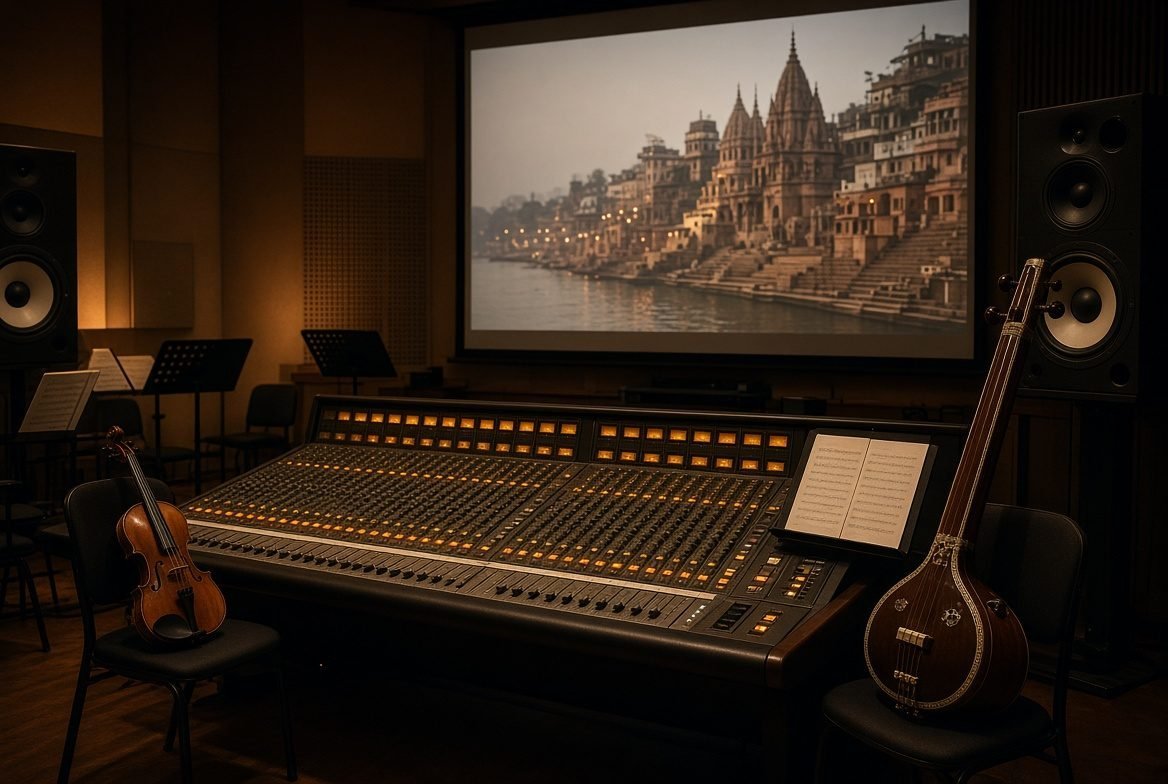
The promotional campaign for The Vvaan has run into a dispute over music. The vocalist and composer Sargam Vaish has claimed that approximately 25 seconds of his track Aigiri Nandini were used in the film's trailer without his permission, Hindustan Times reported.
He has demanded that the audio be removed and has threatened legal action, citing an existing deal with a label, according to Times Now and News18.
This is an allegation. The makers of the film, which stars Sidharth Malhotra and Tamannaah Bhatia, have not confirmed it, and no response from them has been reported. The film is in its pre-release promotional phase, with reports pointing to a theatrical window around 25 September 2026.
- Who is claiming: Sargam Vaish, vocalist and composer
- The track: Aigiri Nandini
- Duration alleged: approximately 25 seconds
- Where: the trailer for The Vvaan
- What he wants: removal of the audio; legal action threatened
- Film-makers' response: none reported
- Reported release window: around 25 September 2026
What is being alleged, and what is not established
It is worth separating the two carefully, because a claim of this kind moves quickly and gets reported loosely.
What has been stated publicly is Vaish's account: that around 25 seconds of his track appear in the trailer, that he did not give permission, that he has asked for the audio to be taken down, and that he has an existing arrangement with a label which he says the use conflicts with.
What has not been established is whether the use occurred as described, whether any clearance was obtained through another route, or what the terms of his label deal actually are. None of that has been confirmed, and the film's makers have not commented publicly.
How trailer music clearance usually works
The following is background on standard practice rather than a description of what happened in this case.
Music used in a film trailer generally requires two separate permissions: one for the underlying composition, and one for the specific recording of it. Those rights are frequently held by different parties — a composer or publisher on one side, a label on the other — and clearing one does not clear the other.
That split is where a large share of trailer music disputes originate. A production can hold a valid agreement covering one layer and still face a claim over the other, and the person who ends up making the claim is often the one further from the negotiation.
The two clearances that a trailer needs
| Right | What it covers | Typically held by |
|---|---|---|
| Composition | The underlying musical work | Composer or publisher |
| Recording | The specific recorded performance | Label |
Why the amount of music matters
The figure at the centre of the claim — approximately 25 seconds — is the kind of detail that sounds minor and is not.
A trailer runs to a couple of minutes at most, so 25 seconds is a substantial share of its running time, and trailer music is not background: it is the element that sets the tone of the cut and is often the thing an audience remembers. A rights holder pointing at a specific duration is making a precise claim rather than a general complaint about influence or similarity.
It is also the sort of claim that is straightforward to assess once both sides are on the record. Either the recording was licensed for this use or it was not, and either the licence covered the trailer or it covered something narrower. Disputes of this kind rarely turn on interpretation; they turn on paperwork.
That is why the absence of a response from the makers is the most significant gap in the story as it stands. A single statement confirming where the clearance came from would resolve most of what is currently unknown.
Why these disputes surface during promotion
Trailer music claims almost always appear at this point in a campaign, and the timing is structural rather than tactical.
A trailer is the first part of a film seen by a mass audience, and it is the first moment anyone with an interest in a piece of music used in it can actually hear that it has been used. Before release, the material is internal. The instant the trailer goes out, it is in front of everyone, including rights holders who had no idea a conversation was happening.
The timing is also what gives a claim leverage. A production in the final week before a theatrical release has the least flexibility it will ever have: the campaign is running, the assets are distributed across platforms, and re-cutting a trailer at that point is expensive and visible.
Where this stands
As matters stand, the position is a stated claim and a demand, with no confirmation from the other side and no legal step reported as having been taken.
The film remains in its pre-release phase, with a theatrical window reported around 25 September 2026. No change to the trailer has been reported.
What would resolve it
Two things would move this beyond an allegation. The first is a public statement from the makers, either confirming that the track was licensed and from whom, or acknowledging the claim and setting out what they intend to do about it.
The second is a formal legal step. Vaish has threatened action but none has been reported as filed, and a threat and a filing are materially different things.
Either would clarify a situation that currently rests entirely on one party's account. Neither has happened, and it is not for this report to predict which, if either, will.
Frequently asked questions
What is the music controversy around The Vvaan?
Sargam Vaish has claimed that approximately 25 seconds of his track Aigiri Nandini were used in The Vvaan trailer without his permission. He has demanded removal of the audio and threatened legal action. This remains an allegation.
Have the makers of The Vvaan responded?
No. The film's makers have not confirmed the claim and no response from them has been reported, according to coverage by Hindustan Times, Times Now and News18. No change to the trailer has been reported either.
When is The Vvaan releasing?
Reports point to a theatrical window around 25 September 2026. The film stars Sidharth Malhotra and Tamannaah Bhatia and is currently in its pre-release promotional phase.
Why do trailer music disputes happen so often?
Trailer music usually needs two separate clearances, one for the composition and one for the recording, and those rights are often held by different parties. A claim can arise over one layer even when the other was cleared.
You may also like to read
Samuk movie starts filming with Release in alien thriller
Samuk movie has begun filming in London with Release leading the alien survival thriller, while a 2027 theatrical release remains the target.

Who was Aasha Singh Jaiswal, Mahabharat's Kripi actor?
Aasha Singh Jaiswal, remembered as Kripi in B.R. Chopra's Mahabharat, died in Mumbai on 22 August; reports conflict sharply on her age.

Sa Re Ga Ma Pa Kannada winner Ashmith takes the 2026 title
Sa Re Ga Ma Pa Kannada winner Ashmith lifted the 2026 Li'l Champs trophy, with multiple outlets reporting Rs 20 lakh in prize money.
What is official about Zombie Reddy 2 NXT LVL after the PMF2 retitle?
Zombie Reddy 2 NXT LVL is now the official PMF2 title, with producer-backed reporting confirming key cast and a 2027 release window.
More from this section
More
Mahakali movie locks 8 January 2027; Sriya Reddy plays Kali
Mahakali movie sets 8 January 2027, with Sriya Reddy as Goddess Kali and Bhoomi Shetty as Maha in the newly clarified cast line-up.
Brahmastra 2: Does reported Jio exit put April 2027 plan at risk?
Brahmastra 2 is reportedly seeking a new studio partner after Jio talks failed, putting its reported April 2027 shoot target under scrutiny.

Drishyam 3 release date locked for 2 October 2026 with first poster
Drishyam 3 release date is 2 October 2026. Ajay Devgn returns as Vijay Salgaonkar in Drishyam: The Conclusion, whose first poster is out.