Sanand Semiconductor Plant: What CG Semi's Launch Means for India
Commercial production at CG Semi's chip assembly and test facility in Sanand, marked by remarks from Prime Minister Modi, has renewed focus on how far India's semiconductor manufacturing push has actually come.
The NE Times Business Desk
Commentary & Analysis ·

India's semiconductor ambitions are back in the spotlight after Prime Minister Narendra Modi marked the start of commercial production at CG Semi's outsourced semiconductor assembly and test (OSAT) facility in Sanand, Gujarat. According to The Indian Express, Modi recalled wanting a chip factory in India two decades ago, framing the launch as evidence that the country is now pursuing bigger industrial goals.
What the Sanand facility actually does
It is worth being precise about where Sanand sits in the chip value chain. An OSAT plant assembles, packages and tests semiconductors; it is not an advanced wafer fabrication plant. That distinction matters, but it does not diminish the milestone. Assembly and testing are essential, high-precision stages of electronics manufacturing, and building them domestically is how countries typically climb toward more advanced capability step by step.
Gujarat's growing electronics footprint
Sanand carries symbolic weight too. Gujarat has steadily positioned itself as a hub for industrial and electronics investment, and a chip-related facility entering commercial production adds another manufacturing credential to the state's portfolio. For the national semiconductor mission, each operational plant is a proof point that incentives and partnerships can translate into real output rather than announcements.
The global backdrop makes the timing significant. Governments worldwide are working to reduce dependence on concentrated chip supply chains, and India wants a meaningful role in that rebalancing through subsidies, technology partnerships and domestic capability building. The prime minister's remarks were political, but the underlying story is industrial: can India convert policy momentum into a durable ecosystem of suppliers, skills and scale?
The NE Times View
The honest measure of India's chip push is not ribbon-cuttings but repeat orders. Sanand's OSAT line is a genuine start, yet the gap between packaging chips and fabricating them remains vast, and closing it will take a decade of consistent policy, not election-cycle enthusiasm. What India should watch now is whether CG Semi attracts anchor customers, whether component suppliers cluster around Sanand, and whether engineering talent stays in Gujarat rather than migrating abroad. If those three things happen, the two-decade-old dream Modi invoked becomes a supply-chain reality rather than a talking point.
This article is original commentary and analysis by The NE Times. Background facts were referenced from The Indian Express.
You may also like to read

CG Semi Sanand Plant Opens, Boosting India's Semiconductor Drive
Prime Minister Narendra Modi inaugurated CG Semi's chip assembly and test facility in Sanand, Gujarat, giving India's semiconductor mission a working manufacturing milestone rather than another policy promise.
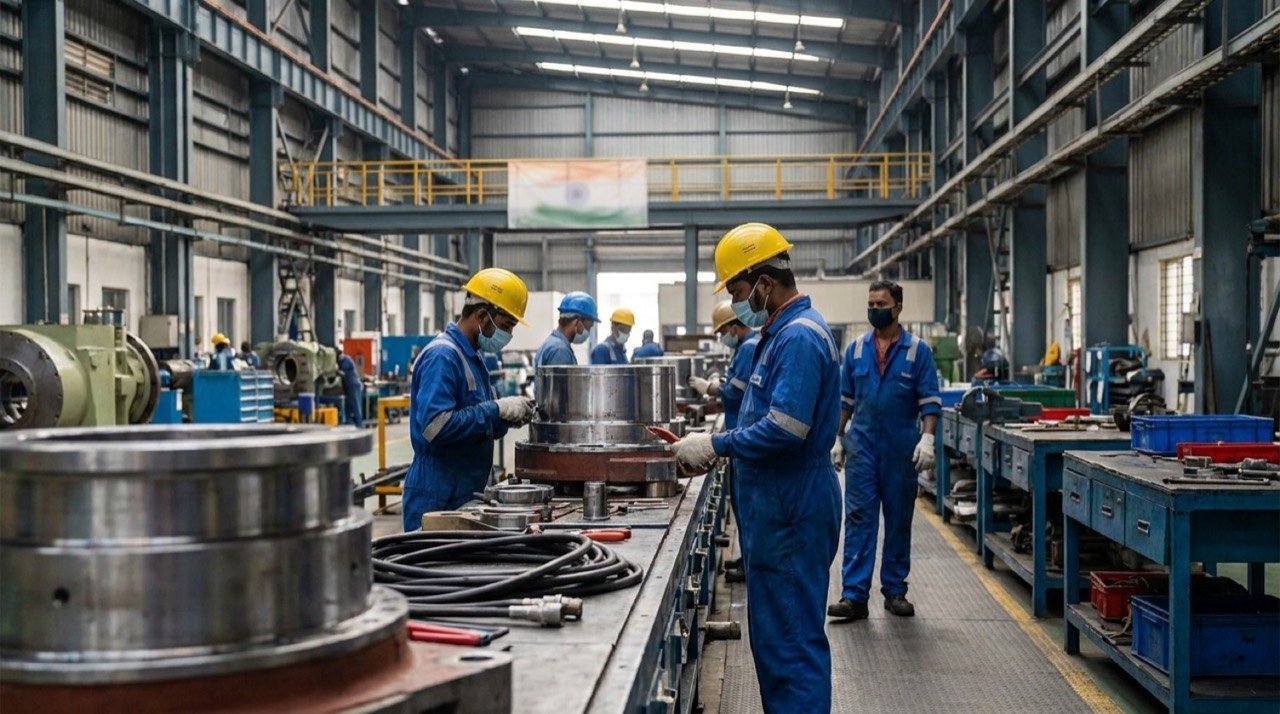
Defence Ministry Plans Seven Manufacturing Clusters to Boost Military Production
India's Ministry of Defence is reported to be planning seven manufacturing clusters to deepen supply chains, cut import dependence and draw private industry into higher-value military production.
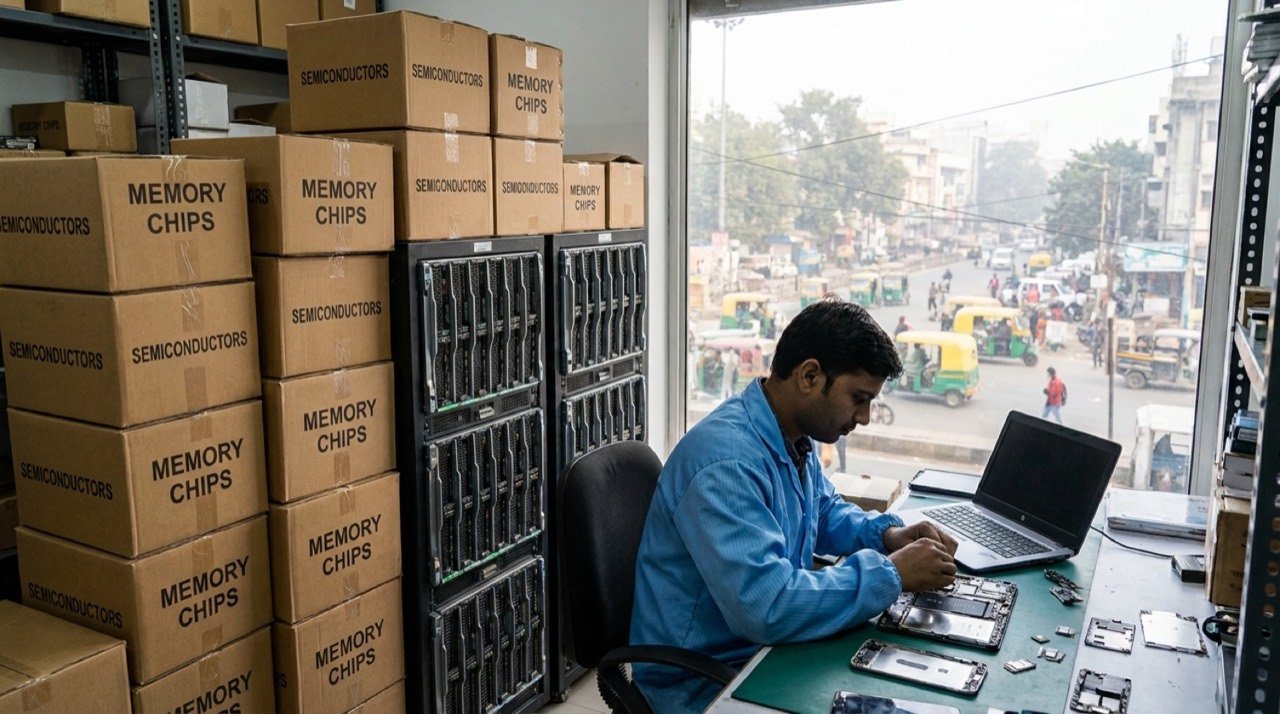
AI Chip Demand May Push Up Smartphone and Laptop Prices in India
Surging demand for memory and storage chips from AI data centres is squeezing global supply, threatening to make smartphones, laptops and gaming devices costlier for Indian consumers.

India's Chip Ambitions Take Shape As Tata Fab And Micron Plant Advance
With a notified SEZ for the Tata fab in Dholera, Micron's assembly plant operational and 13 projects cleared under the national mission, India's semiconductor build-out is moving from paper to silicon.
More from this section
More
Adani Case: US DOJ Pushes for Permanent Dismissal of Charges
The US Department of Justice has urged a judge to permanently dismiss charges against Gautam Adani, calling the case legally flawed — a reversal with consequences for markets, diplomacy and cross-border enforcement.

Akasa Air Inducts 40th Aircraft in Indian Aviation Scale-Up
Akasa Air's 40th aircraft, ferried to Bengaluru via Seattle, Reykjavik and Cairo, marks a fleet milestone for the young carrier and a fresh signal that India's aviation market remains firmly in expansion mode.

BARC Ratings Suspension Leaves Indian TV Industry Flying Blind
BARC's pause on television ratings has put India's broadcast measurement system under fresh scrutiny, leaving broadcasters, advertisers and media planners without the weekly audience data that anchors the TV economy.