PSU Banks See Loan Growth Outrun Deposits as Credit Demand Holds
Public-sector banks are lending faster than they are gathering deposits, a gap that signals firm credit appetite in the economy but puts funding costs and deposit mobilisation under the spotlight.
The NE Times Business Desk
Commentary & Analysis ·
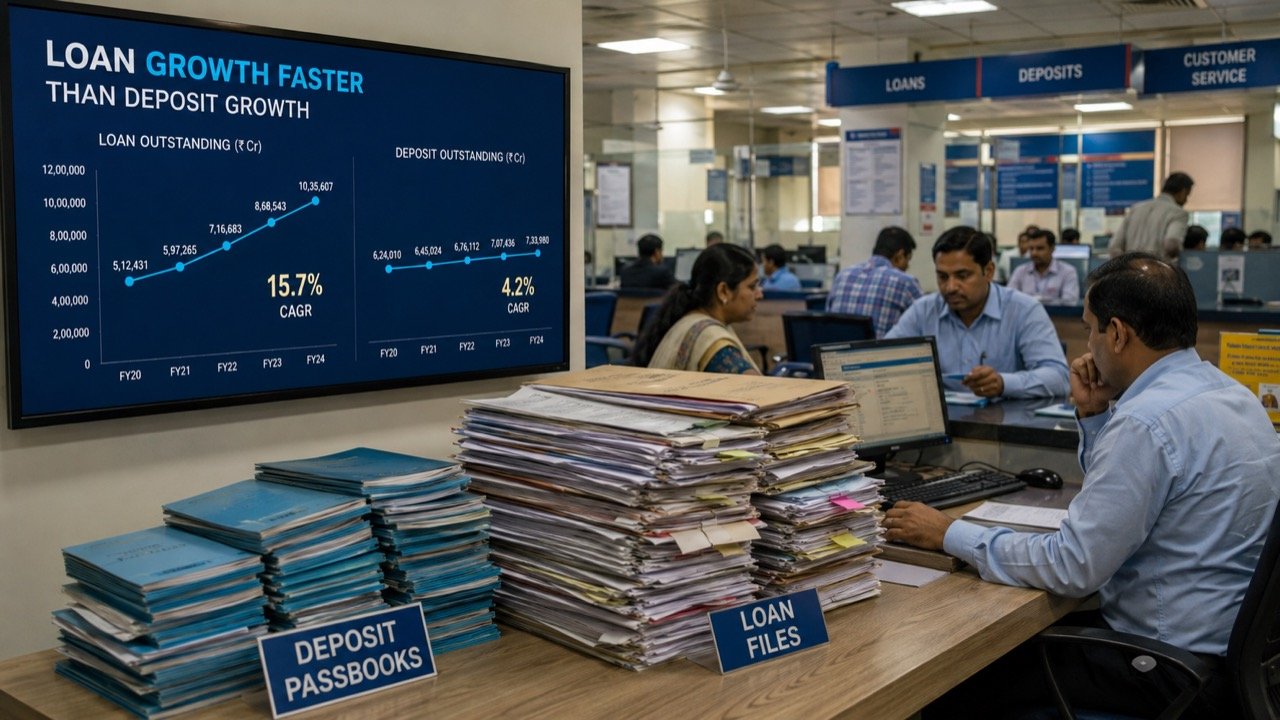
India's public-sector banks are back in the spotlight after fresh reports indicated that their loan books are expanding faster than their deposit bases. The widening loan-deposit gap has emerged as one of the most closely watched signals in the banking sector, pointing to credit demand that remains firm even as funds flowing into savings and term deposits grow at a slower clip.
Why the loan-deposit gap matters
Deposits are the raw material of lending. When loan growth persistently outpaces deposit growth, banks must either compete more aggressively for household savings, lean on costlier market borrowings, or moderate the pace of credit expansion. Each of those choices carries consequences for margins, balance-sheet strength and the sustainability of the lending cycle.
On the positive side, strong loan demand is generally a healthy indicator. It suggests that businesses are borrowing for working capital and expansion while households continue to take retail credit, both of which feed into broader economic activity and can lift bank profitability.
What it means for borrowers and savers
The trend filters directly into everyday finance. If banks need to attract more deposits, savers could see better rates on fixed and recurring deposits. At the same time, tighter funding conditions can influence loan pricing, affecting home loans, working-capital lines for small businesses and retail borrowing costs. How PSU banks balance growth against liquidity will shape credit conditions in the months ahead.
For now, the data reads as a story of firm credit appetite rather than stress. But analysts and the market will be watching deposit mobilisation numbers closely, since a prolonged gap would force harder choices on funding and growth.
The NE Times View
The loan-deposit divergence is less a warning light than a test of discipline for India's state-run lenders. Years of balance-sheet repair have given PSU banks room to grow, and it would be a setback to squander that on a funding squeeze. The sensible path is to reward depositors better rather than chase expensive wholesale money. If the gap narrows through stronger deposit mobilisation, this credit cycle can stay both robust and durable — good news for borrowers, savers and the wider economy alike.
This article is original commentary and analysis by The NE Times. Background facts were referenced from Business Standard.
You may also like to read

Reliance Capital Ex-CFO Arrest Puts Corporate Governance on Watch
The CBI's arrest of a former Reliance Capital chief financial officer in a reported Rs 9,280 crore bank-fraud case has renewed scrutiny of corporate disclosures, lender due diligence and the strength of India's financial safeguards.

Union Bank Shares Fall After Q1 Update and Management Changes
Union Bank of India stock slipped after its June-quarter business update showed slower deposit growth alongside stronger advances, with senior management changes adding to investor caution.

Jaipur UAPA Arrest Puts Online Radicalisation Probe Under the Spotlight
Rajasthan ATS has arrested a Jaipur woman under the UAPA over alleged online anti-national activity and contact with people linked to Jaish-e-Mohammed, with the investigation still at an early stage.
India Economy This Week: Energy Relief, PMI and Monsoon Demand
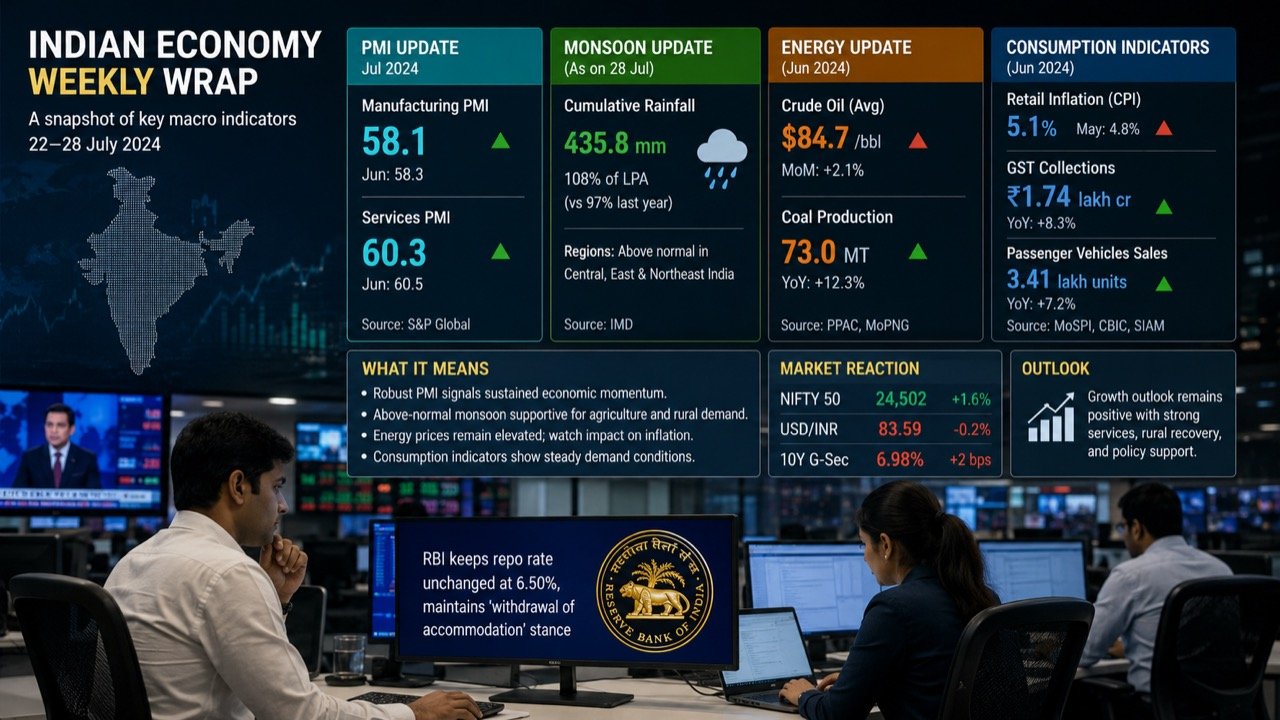
India's near-term growth picture is being read through a dashboard of indicators this week, with energy costs, PMI activity readings and monsoon-linked rural demand each pulling the conversation in different directions.
More from this section
More
Adani Case: US DOJ Pushes for Permanent Dismissal of Charges
The US Department of Justice has urged a judge to permanently dismiss charges against Gautam Adani, calling the case legally flawed — a reversal with consequences for markets, diplomacy and cross-border enforcement.

Akasa Air Inducts 40th Aircraft in Indian Aviation Scale-Up
Akasa Air's 40th aircraft, ferried to Bengaluru via Seattle, Reykjavik and Cairo, marks a fleet milestone for the young carrier and a fresh signal that India's aviation market remains firmly in expansion mode.

BARC Ratings Suspension Leaves Indian TV Industry Flying Blind
BARC's pause on television ratings has put India's broadcast measurement system under fresh scrutiny, leaving broadcasters, advertisers and media planners without the weekly audience data that anchors the TV economy.