OpenAI Makes GPT-5.5 the Heart of ChatGPT as Older Models Retire
OpenAI has rolled GPT-5.5 into ChatGPT as the new default and begun phasing out GPT-5.2, while pushing personalisation upgrades to free and lower-tier users in June.
The NE Times Technology Desk
Commentary & Analysis ·

OpenAI has cemented GPT-5.5 as the backbone of ChatGPT, installing GPT-5.5 Instant as the default model and steadily retiring older versions. As of 12 June, GPT-5.2 is no longer selectable in ChatGPT, with existing conversations migrated automatically to the equivalent GPT-5.5 model.
The move continues a recurring pattern among AI developers: as newer flagship systems arrive, older ones are pulled from the lineup to simplify choices and steer users onto more capable models. Automatically migrating existing conversations is designed to keep the transition seamless, so users continue their chats without manually switching models.
What changes for users
The company positions GPT-5.5 as a meaningful step up for everyday and professional use, citing gains in coding and knowledge work alongside reduced hallucination in sensitive domains such as law, medicine and finance. Hallucination, where a model produces confident but incorrect information, is a central concern in high-stakes fields, so reducing it in legal, medical and financial contexts is one of the more consequential claims a model update can make.
With GPT-5.5 Instant set as the default, most users encounter the new model without changing any settings. The 'Instant' designation typically points to a variant tuned for fast, responsive replies, suited to the everyday queries that make up the bulk of consumer use.
Personalisation reaches free users
On 9 June, OpenAI began rolling personalisation improvements out to ChatGPT Go and Free tiers, widening access to features that tailor responses to a user's stated preferences and history. Extending personalisation beyond paid tiers broadens the reach of capabilities that were previously more limited, part of a wider industry move to bring richer features to free and lower-cost users.
Personalisation lets the assistant adapt to how an individual works, drawing on preferences and prior context to shape its responses. The June updates and rollouts include:
- GPT-5.5 Instant installed as the default model in ChatGPT
- GPT-5.2 no longer selectable as of 12 June, with conversations migrated automatically to GPT-5.5
- Claimed gains in coding and knowledge work, and reduced hallucination in law, medicine and finance
- Personalisation improvements extended to ChatGPT Go and Free tiers from 9 June
Why it matters
The moves underline how quickly the assistant landscape is consolidating around newer flagship models, as providers retire older versions to simplify their lineups and steer users onto more capable systems. Streamlining the model menu reduces confusion for everyday users, but it also concentrates traffic on the latest releases, accelerating the pace at which older systems are phased out.
Outlook
As OpenAI standardises ChatGPT around GPT-5.5 and pushes personalisation to a wider audience, the broader competitive dynamic with rivals such as Google's Gemini line comes into sharper focus. The cadence of new flagships and rapid retirement of older ones looks set to continue, keeping the assistant market in a state of fast, ongoing turnover that users will feel directly in the tools they rely on.
The NE Times View
Retiring older models while pushing personalisation to free tiers shows OpenAI defending its consumer lead as Google leans on scale. For users, the churn is double-edged: better defaults, but workflows and prompts built on deprecated models keep breaking. The frontier race is increasingly about retention and trust, not headline capability, and constant deprecation tests both.
This article is original commentary and analysis by The NE Times. Background facts were referenced from OpenAI and TechCrunch.
You may also like to read
OpenAI Eyes Gigawatt-Scale India Data Centre As Local Users Cross 100 Million
With India now its second-largest market and weekly ChatGPT users past 100 million, OpenAI is scouting partners for a one-gigawatt facility under its Stargate infrastructure push.

Google's Gemini 3.5 Flash Powers Its AI Push as the OpenAI Race Intensifies
Google's fastest agentic model is now the default brain for over 900 million Gemini and Search users, claiming to beat last year's Pro tier on coding and multimodal tests.

Microsoft unveils seven in-house MAI models at Build 2026, loosening its grip on OpenAI
With a reasoning model, a coding flash variant and image generators trained on its own licensed data, Microsoft is signalling it wants to build at the frontier rather than rent it.

IndiaAI Mission Backs Eight New Foundational Models and Expands AI Data Lab Network
The government's IndiaAI Mission has greenlit eight new indigenous foundational model projects and rolled out 30 fresh AI Data Labs, deepening the push for sovereign, India-built artificial intelligence.
More from this section
More
ISRO Fires Semi-Cryogenic Engine Power Head at 175 Tonnes in Landmark Hot Test
ISRO successfully ran its indigenous semi-cryogenic engine power head at 175 tonnes of thrust, clearing a key hurdle toward powering the LVM3 upgrade and the Next Generation Launch Vehicle.
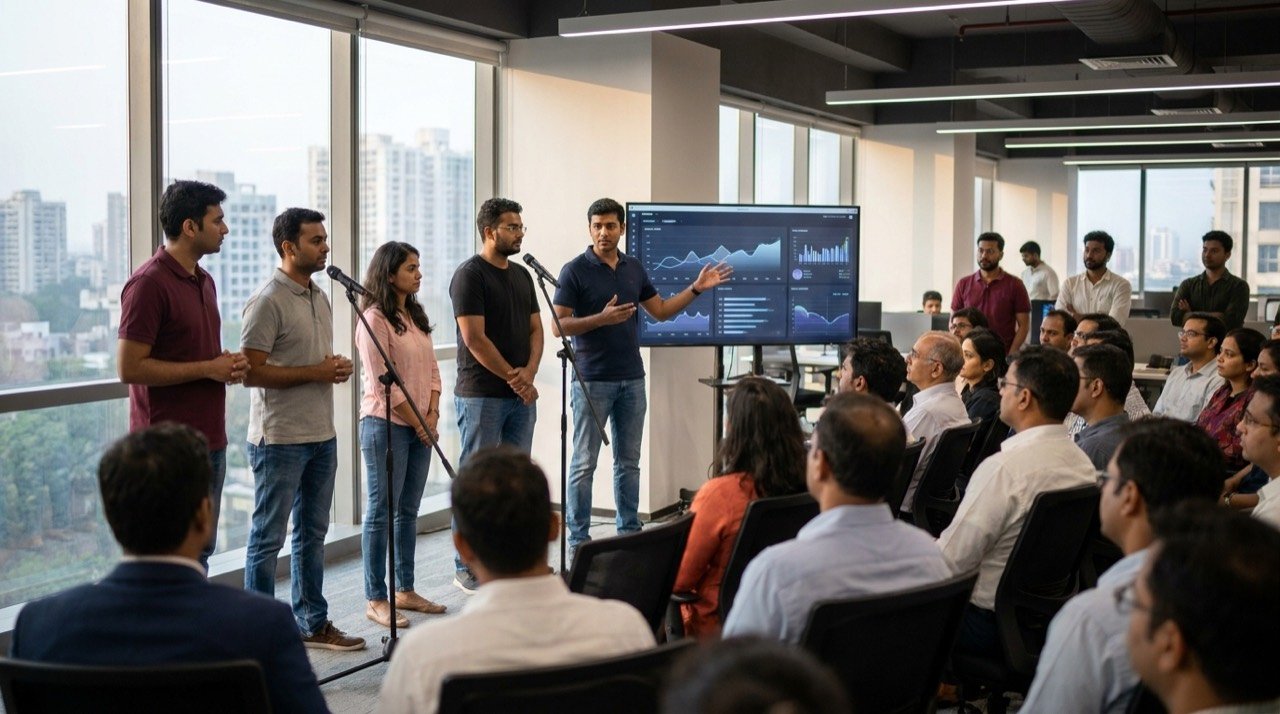
India Tech Funding Climbs to $7.2 Billion in H1 2026 Even as Deal Count Slumps
Indian tech startups raised $7.2 billion in the first half of 2026, up 12 per cent year-on-year, but the number of funding rounds fell sharply as capital concentrated in a handful of mega-deals.

OnePlus N6 Headlines a Crowded End-June Gadget Calendar in India
The OnePlus N6, with its 8,000mAh battery and sub-Rs 25,000 price tag, leads a busy late-June run of smartphone launches in India spanning OnePlus, Oppo and Samsung.