NASA names its Artemis III crew, with a record-holding astronaut among the four
Commander Randy Bresnik will lead a four-person crew on a two-week orbital flight to test the technology that will eventually put astronauts back on the Moon.
The NE Times Technology Desk
Commentary & Analysis ·

NASA has named the four astronauts who will fly its Artemis III mission, the flight tasked with testing the technology meant to return humans to the Moon. At a press conference on June 9, the agency revealed a crew led by commander Randy Bresnik, with European Space Agency astronaut Luca Parmitano as pilot and Frank Rubio and Andre Douglas serving as mission specialists.
The announcement is a milestone for a programme that has weathered repeated delays, even as the mission profile itself has evolved. Rather than a Moon landing, Artemis III as currently planned will spend roughly two weeks in low-Earth orbit, making scientific observations and rehearsing the procedures that future lunar missions will depend on.
The crew
The four bring a mix of deep experience and fresh perspective. Bresnik, a Marine Corps colonel, is a former International Space Station commander and a test pilot with more than 7,000 flight hours. Parmitano, an Italian Air Force colonel and test pilot, is a veteran ESA astronaut whose inclusion underscores the international character of the Artemis effort.
The mission specialists round out the roster:
- Frank Rubio, a family-medicine physician and Army Black Hawk pilot who holds the US record for the longest single spaceflight at 371 days
- Andre Douglas, a Coast Guard reserve commander making his first spaceflight
- Randy Bresnik, commander and veteran ISS mission leader
- Luca Parmitano, ESA astronaut serving as pilot
A mission that has changed shape
Artemis III was once envisioned as the flight that would land the first woman and first person of colour on the Moon. As schedules slipped and hardware development lagged, NASA reworked the plan so that the crewed lunar landing shifts to a later mission, leaving Artemis III to validate the systems that make such a landing possible.
Expected to launch next year, the flight is designed to test two commercially developed lunar landers that are slated to carry astronauts to the surface during the Artemis IV mission later this decade. In that sense it is a dress rehearsal: proving out rendezvous, docking and life-support procedures in orbit before the real descent is attempted.
Why the crew choice drew attention
The selection prompted commentary partly because of its composition, and NASA's leadership publicly defended the choices the day after the announcement. The agency framed the crew as the right mix of experience for a high-stakes test flight, with members chosen to take what it described as calculated risks in service of the broader programme.
Rubio's presence is notable on its own. His 371-day stay aboard the ISS, the result of an extended mission after a spacecraft coolant leak, gives the crew a member with unmatched recent experience of long-duration spaceflight and the physiological toll it takes.
The road to the Moon
Artemis III is one rung on a longer ladder. The orbital test is meant to de-risk the landing that follows, and the whole sequence depends on commercial partners delivering landers and spacesuits on schedule, a dependency that has historically been the programme's weak point.
For now, NASA has its crew and a clearer near-term goal. Whether the 2027 launch target holds will depend on hardware that is still in development, but naming the astronauts gives a long-running effort a human face and a renewed sense of momentum heading into a pivotal stretch.
The NE Times View
Naming a crew turns an abstract programme into a human story, and that matters for sustaining political will through inevitable delays. For India, fresh off Chandrayaan and building toward Gaganyaan, the Artemis push is both inspiration and competitive backdrop. The crew is set; the hardware timeline is not, and lunar ambitions have a long history of slipping. India should treat this as a benchmark, not a spectator sport.
This article is original commentary and analysis by The NE Times. Background facts were referenced from Smithsonian Magazine and NBC News.
You may also like to read

NASA Names Artemis III Crew for Crucial Step Back to the Moon
Four astronauts, including an Italian from the European Space Agency, were assigned to a 2027 Earth-orbit test flight that will help pave the way for a crewed lunar landing.

Deep-tech and oncology lead India's startup funding week as Rekise and 4baseCare raise capital
A robust week of venture deals saw marine-defence robotics and precision cancer diagnostics draw investor attention, underscoring a tilt toward strategic, science-led startups.

'Panchayat' Season 5 Heads to Prime Video on the Back of Record Numbers
With Season 4 having delivered the franchise's biggest-ever opening and trended in dozens of countries, Prime Video has confirmed the Mishra family's Phulera saga will return in 2026.
AI and Climate Deals Power a Busy Week for Indian Startup Funding
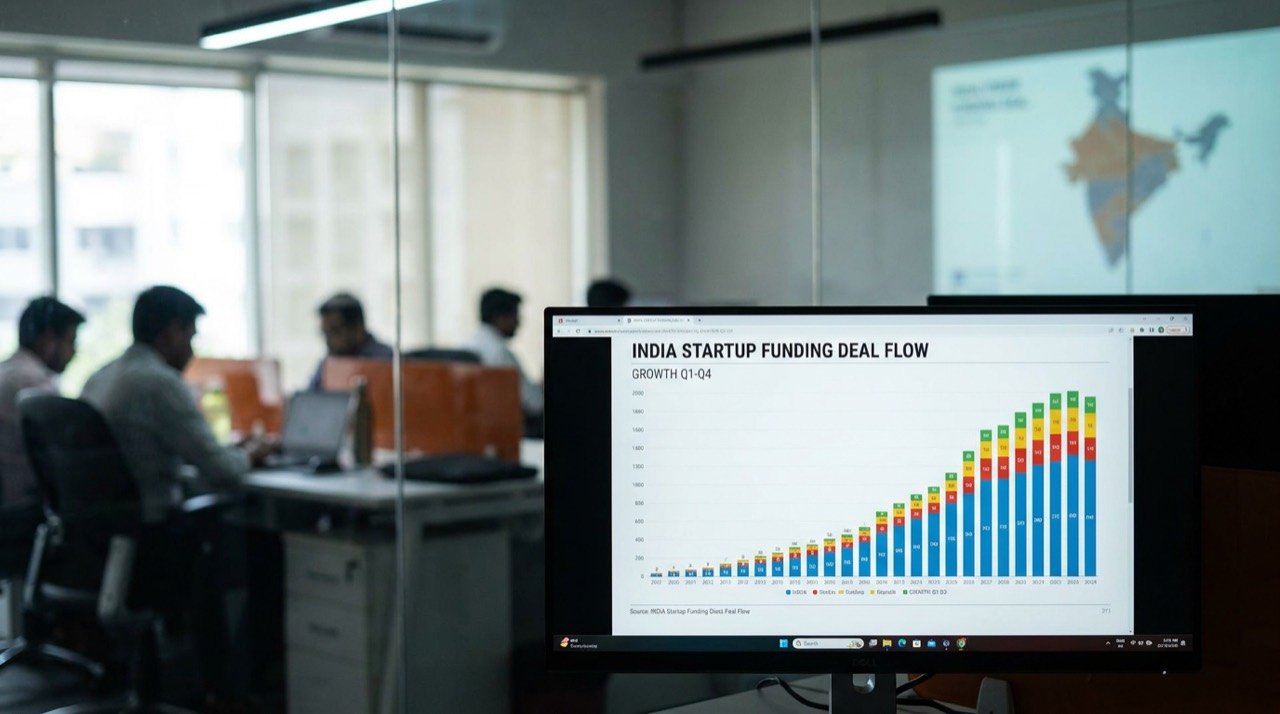
Indian startups raised roughly $400 million across about 20 rounds in a busy mid-June week, with sovereign AI, verifiable AI and climate technology emerging as the dominant investment themes.
More from this section
More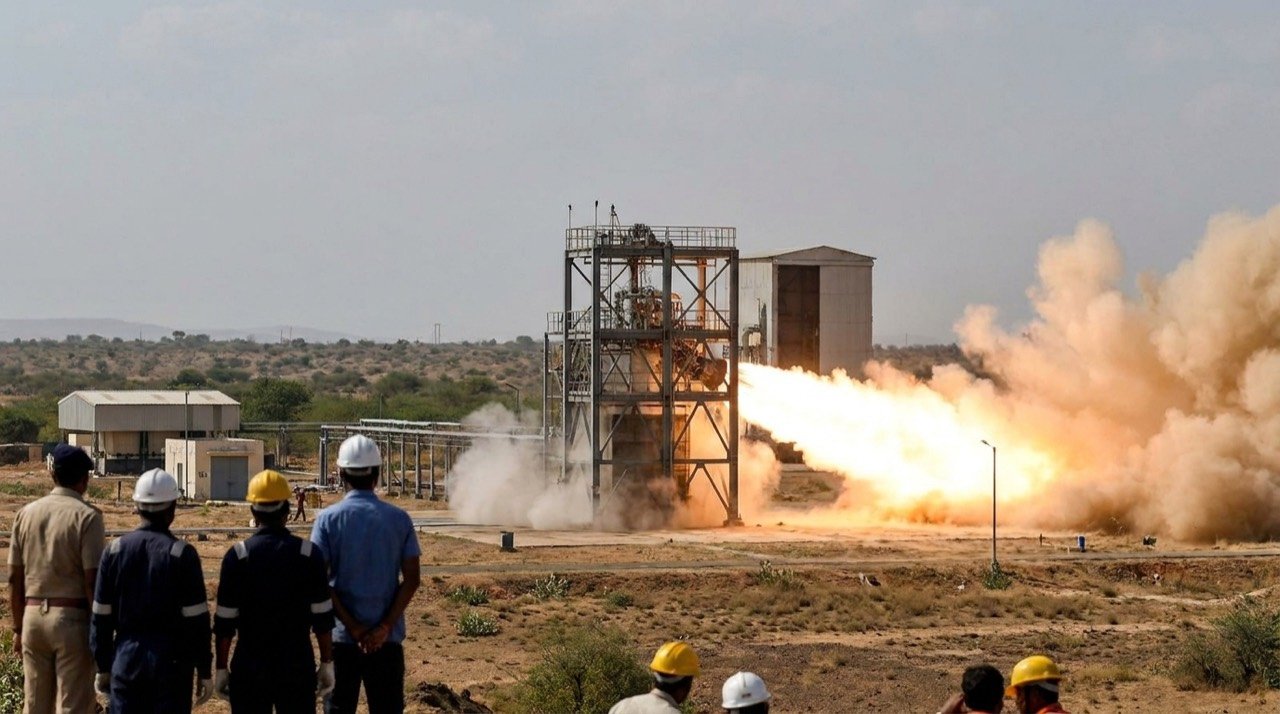
ISRO Fires Semi-Cryogenic Engine Power Head at 175 Tonnes in Landmark Hot Test
ISRO successfully ran its indigenous semi-cryogenic engine power head at 175 tonnes of thrust, clearing a key hurdle toward powering the LVM3 upgrade and the Next Generation Launch Vehicle.

India Tech Funding Climbs to $7.2 Billion in H1 2026 Even as Deal Count Slumps
Indian tech startups raised $7.2 billion in the first half of 2026, up 12 per cent year-on-year, but the number of funding rounds fell sharply as capital concentrated in a handful of mega-deals.

OnePlus N6 Headlines a Crowded End-June Gadget Calendar in India
The OnePlus N6, with its 8,000mAh battery and sub-Rs 25,000 price tag, leads a busy late-June run of smartphone launches in India spanning OnePlus, Oppo and Samsung.