Mumbai Student Protests: How the Cockroach Movement Spread Beyond Delhi
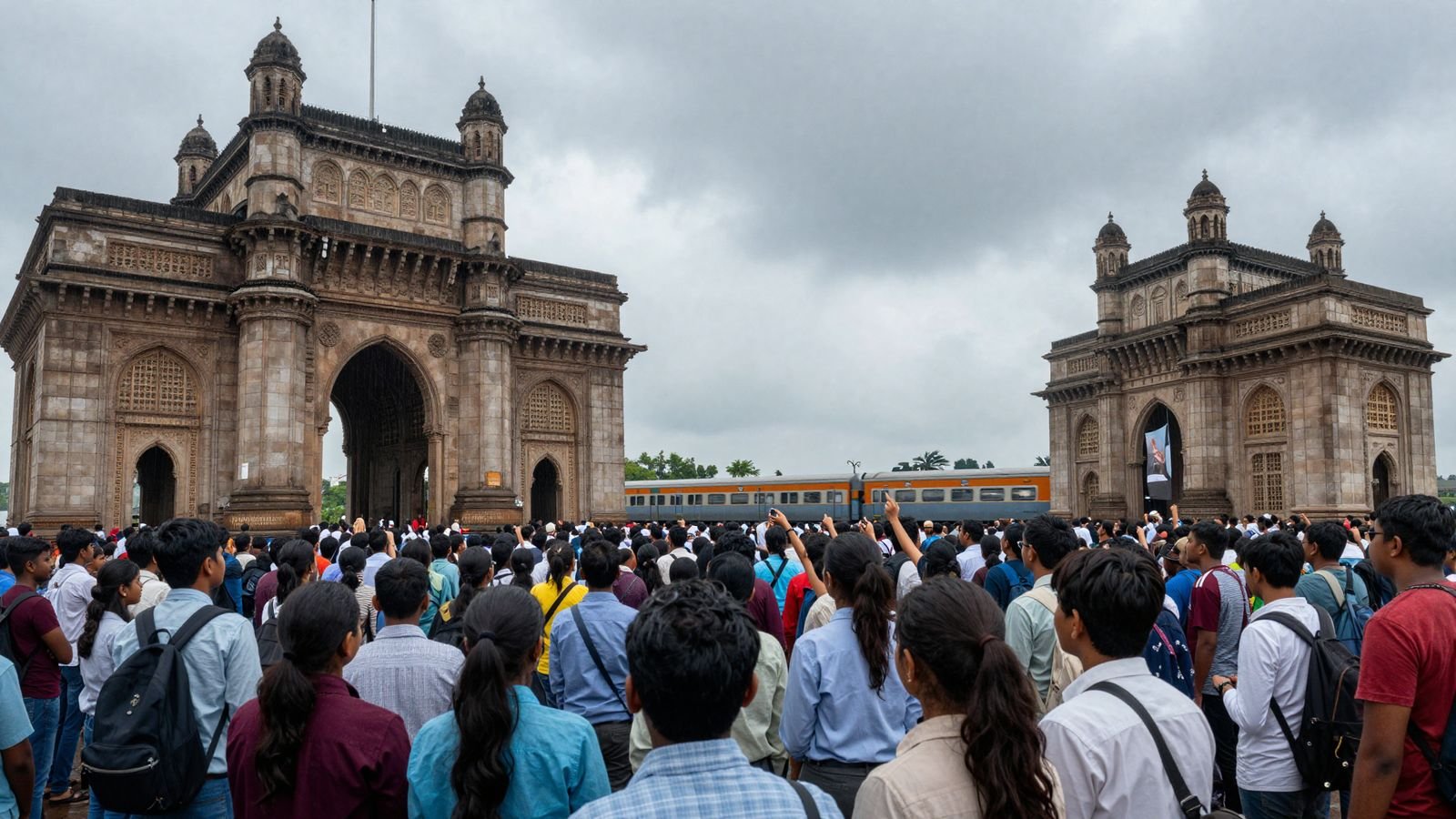
Mumbai demonstrations showed that the movement could reproduce its message in another major city while developing distinct local dynamics and policing
Commentary & Analysis ·
Key facts
- AP reported demonstrators in Mumbai as well as Delhi.
- Images and reports showed slogans, confrontations and police pursuit in parts of the city.
- Actors and public figures amplified the Mumbai action.
- Local organisers linked the protest to national examination reform and student rights.
The latest position
Mumbai demonstrations showed that the movement could reproduce its message in another major city while developing distinct local dynamics and policing challenges. The subject has become one of the most searched strands of India’s July 2026 news cycle because it links a personal act of protest with a much wider student movement. This article provides a stand-alone, publication-ready explanation of Mumbai CJP student protest, using verified reporting available up to 24 July 2026, 3:00 p.m. IST. It avoids treating unproven allegations as established facts and explains where official statements, organiser claims and independent reporting differ. The aim is to help readers understand the event, its significance and the questions that remain after the headline.
What is confirmed and what is still developing
The central reporting task in this article is to separate the confirmed sequence from the claims being made around it. AP reported demonstrators in Mumbai as well as Delhi. Images and reports showed slogans, confrontations and police pursuit in parts of the city. Actors and public figures amplified the Mumbai action. Local organisers linked the protest to national examination reform and student rights. Those facts create the foundation, but they do not answer every political or legal question. The phrase “Mumbai CJP student protest” attracts readers looking for a direct update, so the opening must explain what changed, who confirmed it and what remains unsettled. Responsible coverage should avoid converting slogans into findings of fact. It should also distinguish statements by organisers, police, ministers, doctors, lawyers and eyewitnesses, because each speaks from a different institutional position and may possess only part of the record.
Why this angle matters now
Mumbai demonstrations showed that the movement could reproduce its message in another major city while developing distinct local dynamics and policing challenges. This angle matters because the hunger strike and student protests are not a single event. They combine an examination-integrity dispute, a youth mobilisation, a public-health emergency, negotiations with the Union government, court supervision, policing decisions and a rapidly changing online narrative. A useful article therefore explains not only the latest headline but the mechanism behind it: which demand is being addressed, what remedy has been offered, whether it is written or verbal, who can implement it, and how students can test whether the commitment produces measurable change.
The deeper context
Regional actions show whether a Delhi-centred story has become a national movement, but they require careful verification. A gathering may be organised by the CJP, inspired by it, supported by a local union or entirely independent. Location, permission status, attendance and detention figures should be attributed to named sources. The local education context also matters: candidates in different states face different recruitment exams, language barriers, coaching markets and policing practices. Reporting that includes those details avoids presenting every city as a copy of Jantar Mantar.
The central debate
Decentralisation can protect a movement from a single-site shutdown and give participants safer local options. It can also produce inconsistent demands and make accountability harder when unauthorised actors use the movement's name. Strong national coordination therefore depends on publicly accessible guidelines, verified district contacts and a clear process for disavowing violence or misinformation. The political impact is likely to be measured not only by the number of cities involved but by whether local organisations remain engaged after the immediate news cycle.
What supporters and critics are likely to argue
Supporters will read this development as evidence that sustained public pressure can force institutions to respond. They are likely to emphasise the cost borne by students and by Wangchuk, and to insist that promises must be converted into dates, documents and independent oversight. Critics may question the movement's leadership, the proportionality of resignation demands, disruption to commuters or the accuracy of claims circulating online. A fair article does not manufacture equivalence between verified evidence and unsupported assertion, but it does explain the strongest good-faith arguments on each side and identifies the records that could resolve disagreement.
Implementation questions that cannot be skipped
The next test is implementation. Readers should look for an official text, named responsible ministry, commencement date, budget or staffing plan, reporting schedule and a method for grievances. If the development concerns policing, the relevant questions include case status, medical records, video preservation and independent review. If it concerns examination reform, the questions include security audits, candidate remedies and investigation milestones. If it concerns a public statement, verification requires the original post or interview. These practical checks turn “Mumbai CJP student protest” from a transient headline into an accountability beat that can be followed after the crowds disperse.
What happens next
The most important next steps are likely to unfold on three tracks. Negotiators will test whether the government's assurances cover peaceful protesters and a parliamentary discussion. Organisers will decide whether demonstrations continue, change form or decentralise. Institutions will have to show whether announced reforms produce enforceable rules and visible action. New medical, legal or police information may also alter the assessment. Publishers should update the article rather than silently overwriting it, preserving a dated record of what was known. The story remains live even after the fast ended because the underlying education and accountability dispute has not been fully resolved.
How the issue connects to the wider protest
This story sits inside a broader chain that began with anger over alleged examination failures and expanded through online organising, street demonstrations and Sonam Wangchuk’s fast. The immediate subject—mumbai student protests: how the cockroach movement spread beyond delhi—should therefore be linked to the movement's core demands without implying that every participant supports every demand. Students have spoken about transparency, responsibility, candidate protection and the right to protest; organisers have also sought political consequences. Government announcements, meanwhile, have focused on tougher enforcement, faster trials and dialogue. The gap between those frames explains why a single concession may reduce one risk while leaving the mobilisation intact.
Editorial takeaway
The editorial takeaway is that Mumbai CJP student protest should be covered as an evolving accountability story, not as a one-day spectacle. The most valuable follow-up will compare promises with implementation, give affected candidates and families space without exploiting trauma, and correct false information quickly. Use exact dates and attribute every contested claim. The protest has already demonstrated that student grievances can move from social media to national politics; whether that energy produces durable institutional reform will depend on transparent negotiations, lawful protest management and public access to evidence.
Sources
- Associated Press, 23 July 2026, capital sit-in and police restrictions. https://apnews.com/article/india-cockroach-party-youth-movement-protest-modi-d226d142657cd297c3d4232716a8a626
- India Today, 23 July 2026, Imran Khan joins Mumbai protest and criticises apolitical positioning. https://www.indiatoday.in/movies/celebrities/story/imran-khan-joins-cjp-student-protests-mumbai-apolitical-actors-2954551-2026-07-23
- India Today, 23 July 2026, regional film-industry support. https://www.indiatoday.in/movies/celebrities/story/neet-protest-dulquer-salmaan-imtiaz-ali-others-back-students-after-crackdown-2953957-2026-07-23
- The Times of India, 24 July 2026, Ishaan Khatter supports the protests. https://timesofindia.indiatimes.com/entertainment/hindi/bollywood/news/ishaan-khatter-extends-support-to-cjp-protests-i-am-a-student-first-before-i-am-a-professional/articleshow/132594731.cms
- Verification note: This is an original news-analysis draft. Recheck court orders, medical data, police figures, official assurances and named public statements immediately before publication because the story is developing.
This article is original news analysis and commentary by The NE Times, based on reporting from the sources listed above.
You may also like to read

Tear Gas and Baton Charges at Student Protests: What the Evidence and Law Require
Claims of excessive force require evidence-led reporting that examines the threat faced, warnings issued, tactics used, injuries documented and

Student Suicides in the Protest Narrative: How to Report Claims Without Causing More Harm
Suicide-related claims are among the most emotionally powerful and most ethically sensitive parts of the protest, requiring precise sourcing and
Nagpur Protests and the 45 Detentions Dispute: Why Organiser Attribution Matters
The Nagpur episode demonstrates why reporters must distinguish official CJP actions from independent gatherings that use similar slogans or symbols
Delhi University and the Association of Indian Universities Respond: Appeals, Backlash and Campus Politics
University bodies entered the controversy when appeals to end the fast and messages seen as supportive of the government triggered debate about
More from this section
More
Beyond NEET: Government Recruitment Leaks and the National Exam-Integrity Crisis
The movement resonated nationally because medical entrance testing is only one part of a wider system on which young people depend for education and
Delhi Metro Closures During the Protest: Public Safety, Commuter Costs and Proportionality
Closing stations can reduce crowd pressure near a sensitive area, but the wider cost to commuters makes transparency and narrow tailoring essential
Why the Hunger Strike Ended but the Student Protest Continued
The end of an individual's fast removed an immediate health emergency, but it did not settle every grievance or give protest organisers the same