India Steps Up Telegram Monitoring Over Cybercrime And Fraud Concerns
India's cybercrime agencies are proactively monitoring Telegram groups and channels linked to fraud and illegal content, as the government balances citizen safety against lawful digital communication.
The NE Times Technology Desk
Commentary & Analysis ·

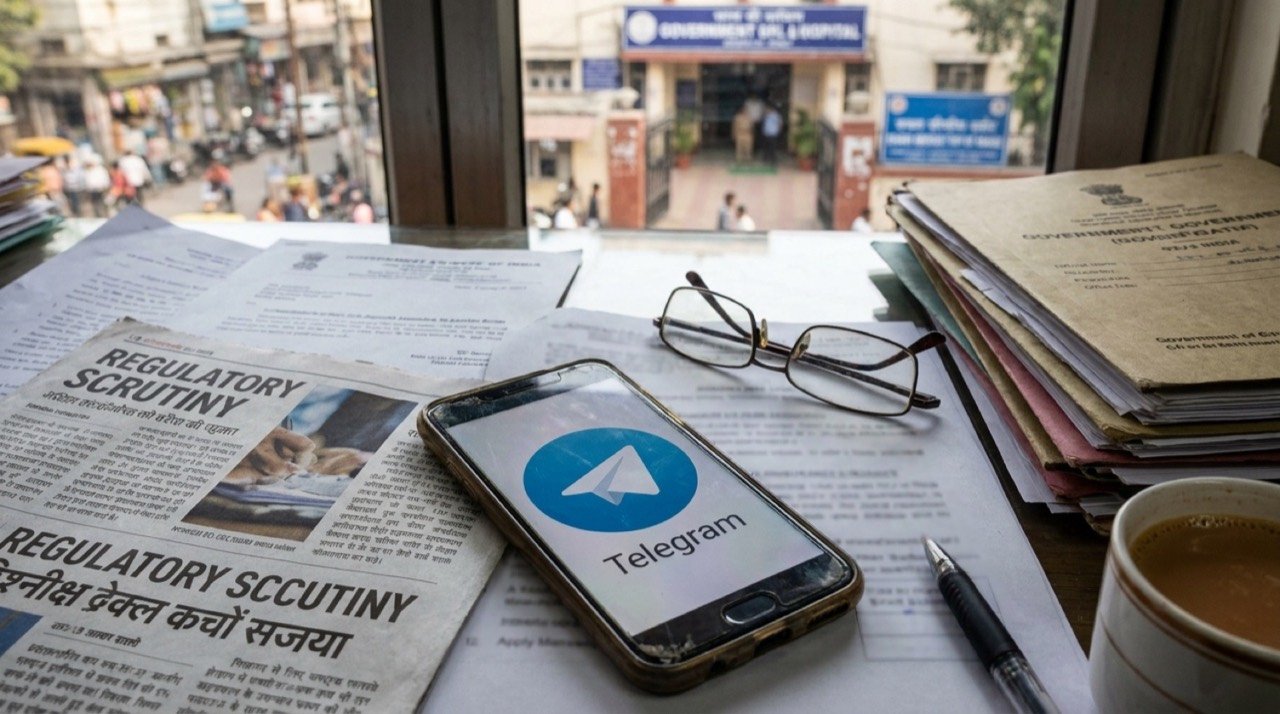
India's cybercrime authorities have placed the messaging platform Telegram under closer scrutiny, citing concerns over illegal content, online fraud and the difficulty of identifying users on privacy-heavy channels. A government report submitted in court, reported by Reuters through Business Standard, said the Home Ministry's cybercrime coordination centre was proactively monitoring groups and channels tied to scams and other unlawful activity.
What the report flags
The report identifies several categories of concern, including financial fraud, fake job advertisements and child sexual abuse material circulating through channels where users can remain hard to trace. A core difficulty, officials note, is that Telegram's privacy features allow people to stay active while concealing identifying details such as phone numbers, complicating efforts to track offenders and respond to complaints quickly.
A temporary app restriction connected to NEET-related concerns has since been lifted, the report indicated, though the ability to edit older messages on the platform remains limited until June 30.
A platform with deep reach
With more than 150 million users in India, Telegram is woven into everyday communication, from study groups and community forums to business coordination. That scale makes the platform both socially valuable and attractive to bad actors, who exploit large channels and anonymity to run scams or distribute illegal material at speed.
The enforcement balancing act
The case underscores a challenge that has grown sharper as digital life expands: protecting citizens from cyber fraud while respecting the rights of the vast majority who use such platforms lawfully. Heavy-handed restrictions risk disrupting legitimate communication, while weak oversight leaves victims exposed. Authorities argue that effective enforcement will hinge on clearer cooperation from the platform, faster complaint handling and transparent, predictable rules.
- The Home Ministry's cybercrime centre is proactively monitoring Telegram channels.
- Concerns include financial fraud, fake job ads and child sexual abuse material.
- Privacy features make identifying offenders difficult.
- A NEET-linked temporary restriction has been lifted.
- Editing of old messages remains limited until June 30.
“The cybercrime coordination centre is proactively monitoring groups and channels linked to illegal content and online fraud.”
— Government report, as reported by Reuters via Business Standard
How India resolves this tension will shape the broader relationship between the state and global messaging platforms. The likely path forward lies less in blanket bans than in structured cooperation, where companies respond promptly to lawful requests and users gain faster recourse when they are targeted, without sacrificing the legitimate freedoms of digital communication.
The NE Times View
Proactive monitoring of fraud and illegal content is reasonable, but the framing matters enormously: surveillance of public criminal channels is one thing, broad monitoring of private communication is another. The government's stated balance between safety and lawful communication must be backed by clear limits and oversight, not left to discretion. Citizens deserve protection from scams and protection from overreach alike. Transparency about what exactly is being watched is the safeguard worth demanding.
This article is original commentary and analysis by The NE Times. Background facts were referenced from Business Standard and Reuters.
You may also like to read

Telegram Faces Growing India Scrutiny After Home Ministry Cybercrime Report
Telegram is under sharper scrutiny in India after a Home Ministry cybercrime report flagged the platform's alleged use for child sexual abuse material and financial fraud across its largest market of 150 million-plus users.

India Monitoring Telegram After Report Flags Illegal Content Risks
A government report cited by Reuters says authorities are proactively tracking Telegram groups over concerns about child abuse material and financial scams.
Telegram Faces Fresh India Scrutiny Over Illegal Content and Exam-Security Risks
Indian officials are again examining Telegram over exam-leak misinformation, channels sharing child sexual abuse material and piracy, reopening the debate on encryption, platform accountability and user safety.

Telegram Restored in India After Temporary NEET-Linked Block
Telegram is available again for many Indian Android users after a temporary nationwide restriction tied to NEET-UG re-exam integrity, reopening debate on exam security and digital limits.
More from this section
More
ISRO Fires Semi-Cryogenic Engine Power Head at 175 Tonnes in Landmark Hot Test
ISRO successfully ran its indigenous semi-cryogenic engine power head at 175 tonnes of thrust, clearing a key hurdle toward powering the LVM3 upgrade and the Next Generation Launch Vehicle.

India Tech Funding Climbs to $7.2 Billion in H1 2026 Even as Deal Count Slumps
Indian tech startups raised $7.2 billion in the first half of 2026, up 12 per cent year-on-year, but the number of funding rounds fell sharply as capital concentrated in a handful of mega-deals.

OnePlus N6 Headlines a Crowded End-June Gadget Calendar in India
The OnePlus N6, with its 8,000mAh battery and sub-Rs 25,000 price tag, leads a busy late-June run of smartphone launches in India spanning OnePlus, Oppo and Samsung.