India's first hydrogen train cleared for daily Jind-Sonipat service as PM Modi prepares to flag it off
India's Supreme Court imposed Rs 3 lakh costs on Samay Raina, Ranveer Allahbadia and Ashish Chanchlani after finding non-compliance with directions in a disability-related case.
Commentary & Analysis ·

Verified key facts
- The Railway Board has approved daily passenger service for India's first hydrogen-powered train on the Jind-Sonipat section, News Station reported.
- Prime Minister Narendra Modi is scheduled to flag off the train from Jind railway station on 17 July 2026.
- The train will run two daily round trips covering 356 km, with each one-way journey of 89 km taking about two hours.
- Developed by Integral Coach Factory, Chennai, the train's fuel cells emit only water vapour and heat.
- Train 74010 departs Jind at 7.40 am; Train 74009 leaves Sonipat at 10.40 am, per the published schedule.
A first for Indian Railways, timetabled and ticketed
India's first hydrogen-powered passenger train is days away from entering regular service. The Railway Board has approved daily operations on the Jind-Sonipat section of Northern Railway in Haryana, News Station reported. Prime Minister Narendra Modi is scheduled to flag off the train from Jind railway station on 17 July, according to Business Standard.
This is not a one-off demonstration run. The train enters the working timetable with numbers, departure times and ordinary passengers. Train 74010 will leave Jind at 7.40 am and reach Sonipat at 9.40 am. Train 74009 will depart Sonipat at 10.40 am and arrive in Jind at 1.00 pm, per the schedule reported by News Station.
The service will make two round trips daily, covering a total of 356 kilometres. Each one-way journey spans 89 kilometres and takes roughly two hours, Rozana Spokesman reported. The route, a modest single-line section through Haryana's farm belt, now becomes the test bed for a technology that only a handful of countries have run in revenue service.
How the technology works
The train runs on hydrogen fuel cells, which generate electricity through a chemical reaction between hydrogen and oxygen. The only by-products are water vapour and heat, making the train a near-zero-emission vehicle at the point of use. Fuel cells replace the diesel engines that still haul passenger services on India's unelectrified sections.
The rake was developed by the Integral Coach Factory in Chennai, working with Indian Railways under the national programme to adopt cleaner transport technologies, Business Standard reported. Building the train domestically matters as much as running it. It keeps the fuel cell integration, safety engineering and maintenance learning inside Indian industry rather than with a foreign licensor.
Why Jind-Sonipat was chosen
A short, flat, low-frequency route is the sensible place to debug a new traction system. Hydrogen refuelling infrastructure has to be built where the train is stabled, and Jind hosts the supporting facilities. The two-hour running time and limited daily mileage keep fuel demand predictable while engineers gather performance data across Haryana's summer heat and winter fog.
The demonstration framing is explicit. Reports in The Researchers and Asian Mirror describe the service as a pilot ahead of any wider deployment. Indian Railways has previously indicated interest in hydrogen operations on heritage and hill routes, where electrification is costly or intrusive. Jind-Sonipat's data will shape whether those ambitions get funded.
The green calculus, honestly stated
Hydrogen trains are only as clean as their hydrogen. Fuel produced from renewable electricity makes the service genuinely low-carbon. Fuel produced from natural gas merely relocates the emissions from the track to the plant. The pilot's credibility will depend on how the railways sources and prices its hydrogen, a detail that deserves as much scrutiny as the launch event.
There is also an economics question. Electrification remains cheaper per kilometre for busy corridors, and Indian Railways has electrified most of its broad-gauge network. Hydrogen's niche is the residual map: branch lines, heritage railways and strategic routes where stringing wires is impractical. A honest pilot will measure cost per kilometre against both diesel and wires, not just emissions.
Cost was a theme of the earliest coverage. Business Standard's explainer on the rollout examined the route, the significance and the cost of the programme together, treating the economics as an open question rather than a settled one. That is the right frame. Early services in any new traction technology are expensive. The purpose of a pilot is to learn whether costs fall with scale, and how quickly.
What it signals beyond the railways
The launch gives India's National Green Hydrogen Mission its most visible consumer-facing application to date. Buses, trucks and refinery feedstocks dominate hydrogen policy documents, but a scheduled passenger train is something citizens can ride. That visibility has political value, which is precisely why the Prime Minister is flagging it off personally rather than leaving it to zonal officials.
Haryana gains something as well. The state rarely features in stories about frontier transport technology. For daily commuters between Jind and Sonipat, though, the practical questions are mundane: fares, punctuality and seat availability. A technology pilot succeeds socially when passengers stop noticing it. The railways would do well to treat those riders as customers first and ambassadors second.
- 17 July: PM Modi flags off the train from Jind station, per Business Standard.
- Service pattern: two daily round trips, 356 km total, 89 km each way.
- Builder: Integral Coach Factory, Chennai, with hydrogen fuel cell traction.
- Status: demonstration project ahead of any wider rollout, per The Researchers.
What to watch after the ribbon is cut
The interesting numbers arrive months after launch. Fuel cell availability, refuelling turnaround, per-kilometre operating cost and reliability through extreme weather will decide whether hydrogen earns a permanent place in Indian traction planning. Punctuality on trains 74009 and 74010 will be the quiet, unglamorous metric that matters most.
If the pilot performs, the railways gains a credible option for the lines electrification will never reach, and Indian industry gains an exportable capability. If it struggles, the lesson will still be cheap at this scale. Either way, from Friday, a train that exhales only water vapour will be carrying commuters between two unremarkable Haryana towns. That itself is remarkable.
Sources
- Business Standard - India's first hydrogen train set to roll out: route, significance, and cost (July 2026)
- News Station - India's first hydrogen-powered train to debut on Jind-Sonipat route; Railway Board approves daily service (July 2026)
- Rozana Spokesman - India's first hydrogen train set for July 17 launch with 2-hour travel on Jind-Sonipat route (July 2026)
- The Researchers - India enters hydrogen rail era with first daily passenger train on Jind-Sonipat route (10 July 2026)
You may also like to read
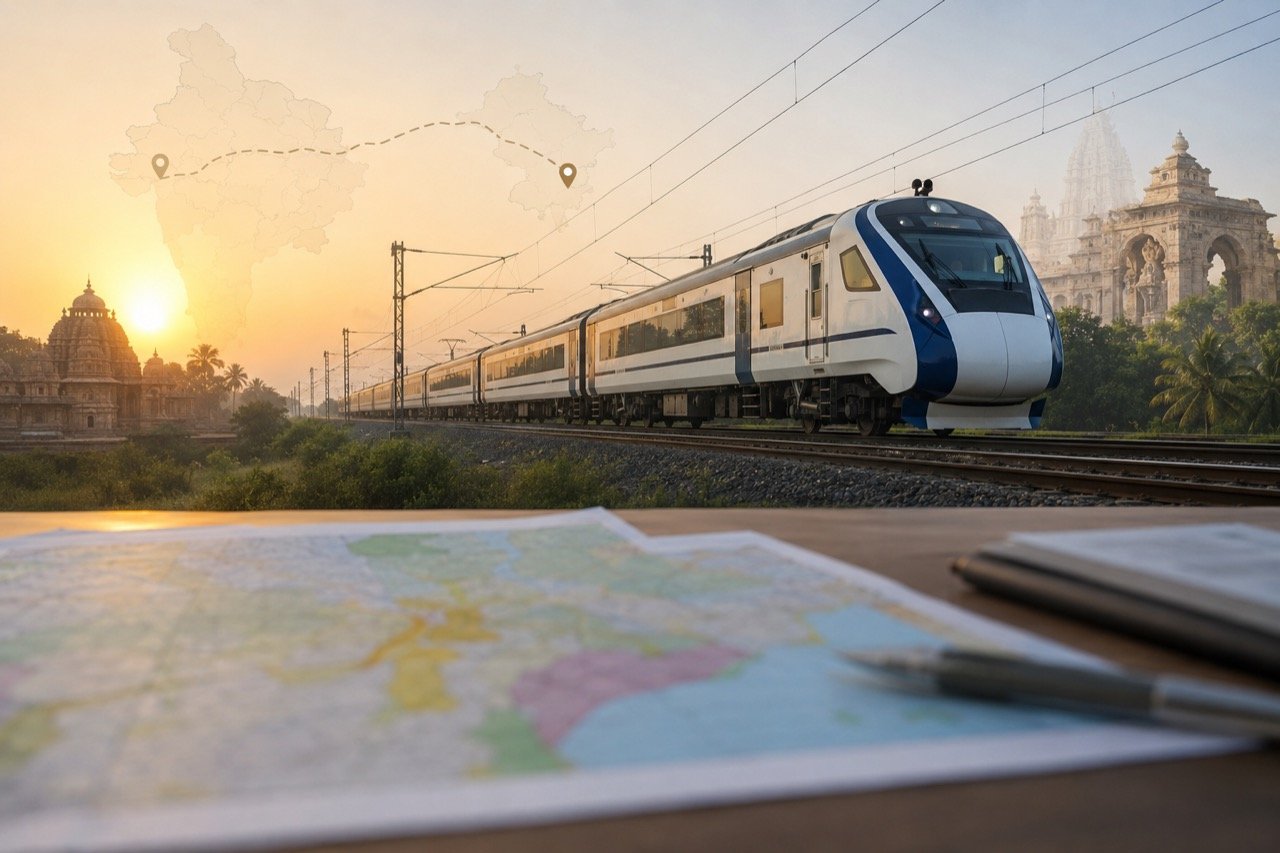
Brahmapur-Udhna Amrit Bharat Express Goes Daily, Boosting Odisha Link
The Brahmapur-Udhna Amrit Bharat Express is set to run every day, giving passengers travelling between Odisha and Gujarat a more dependable and affordable long-distance rail option for work, study and family journeys.
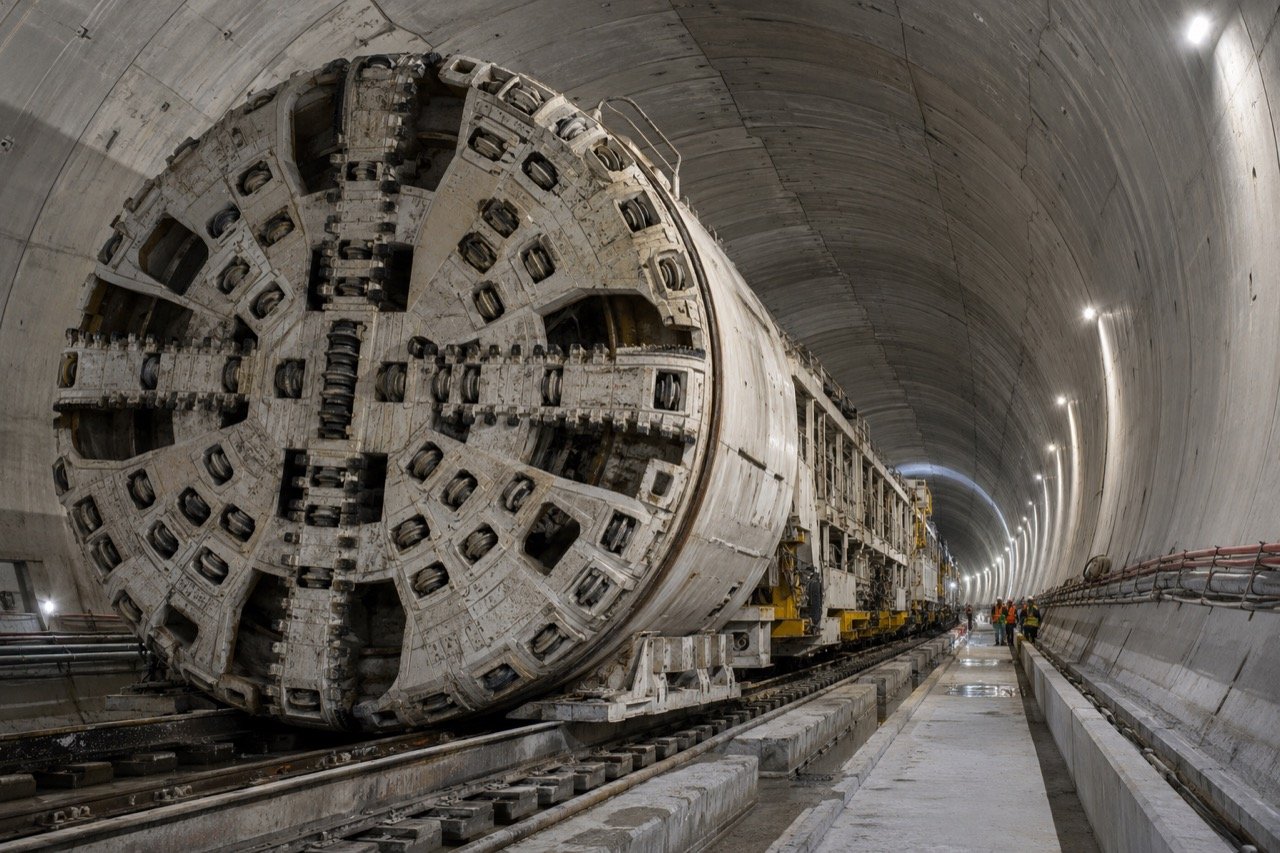
Mumbai-Ahmedabad Bullet Train: India's Largest TBM Starts Digging
India's largest rail tunnel boring machine has begun excavation on the Mumbai-Ahmedabad bullet train corridor, moving the country's flagship high-speed rail project into a visible and technically demanding underground phase.
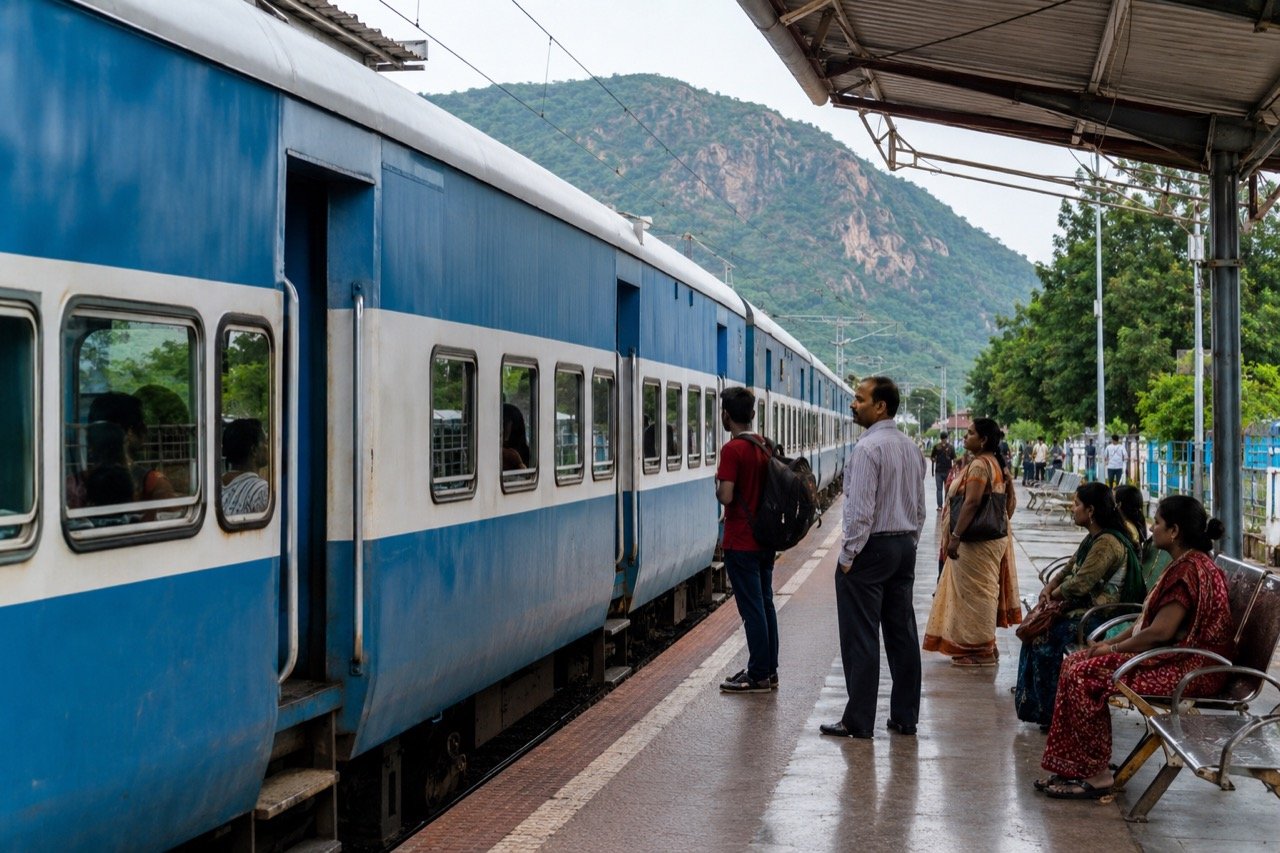
Puri-Koraput Express: New Train to Link Coastal and South Odisha
Indian Railways is introducing the Puri-Koraput Express to give Odisha a more direct passenger link between its coastal pilgrimage hub and the southern hill districts, with route and timetable details now published.
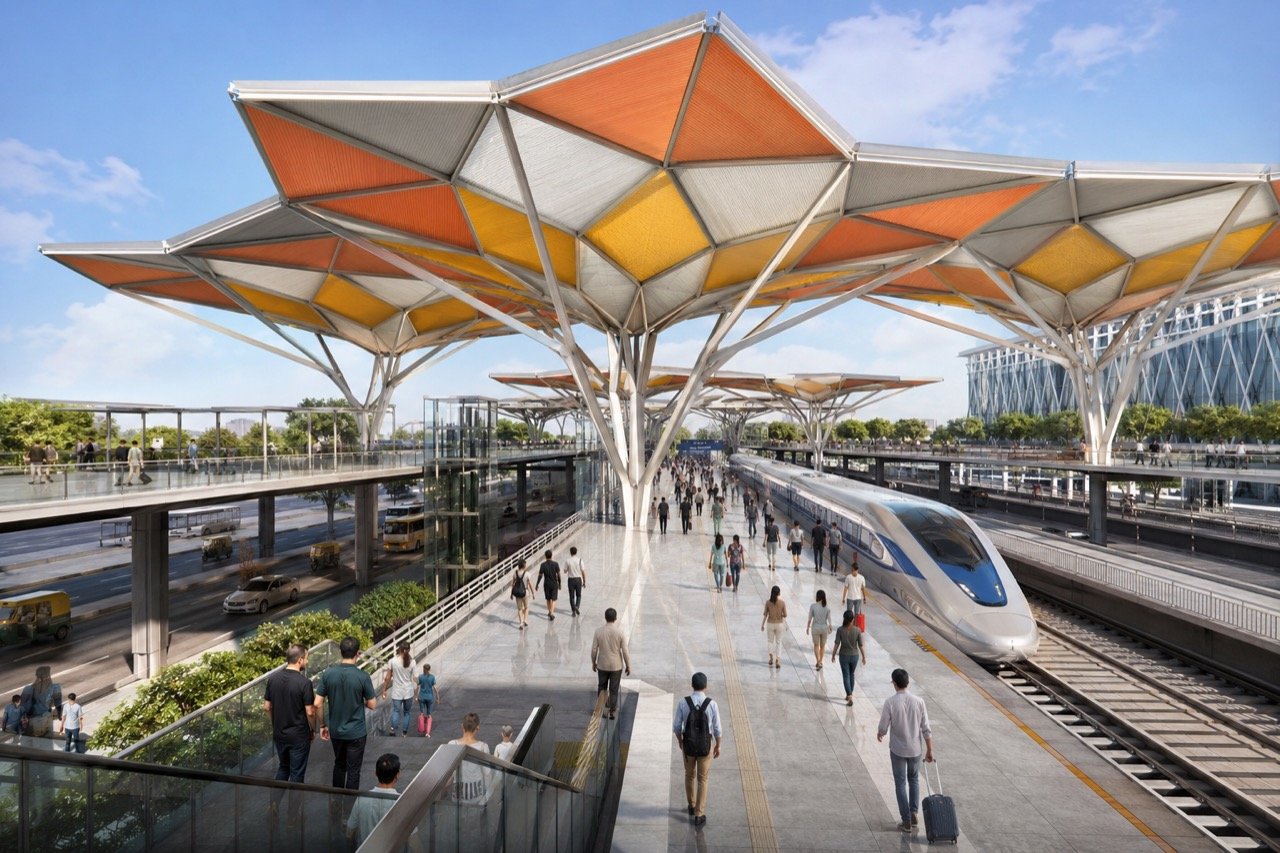
Ahmedabad Bullet Train Station Gets Kite-Inspired Multimodal Hub Plan
Ahmedabad's bullet train station is set to be developed as a multimodal transport hub with a kite-inspired design, giving India's high-speed rail project a distinctive urban landmark rooted in local identity.