Google's Gemini 3.5 Flash Powers Its AI Push as the OpenAI Race Intensifies
Google's fastest agentic model is now the default brain for over 900 million Gemini and Search users, claiming to beat last year's Pro tier on coding and multimodal tests.
The NE Times Technology Desk
Commentary & Analysis ·

Google's Gemini 3.5 Flash, unveiled at I/O 2026 and rolling out aggressively through June, has become the engine behind much of the company's consumer AI. The model now serves as the default for the Gemini app and Google Search's AI Mode, which together reach more than 900 million monthly active users.
Making a single model the default brain across products with such enormous reach is a significant bet, putting Google's newest system in front of a vast audience at once. It also intensifies a competitive race with OpenAI and other developers, each pushing newer flagship models into the hands of users at a rapid clip.
Speed as the headline
The pitch is speed without a steep capability tax. Google says Flash outpaces the older Gemini 3.1 Pro across coding, agentic and multimodal benchmarks while generating output up to four times faster than competing frontier models. The 'Flash' branding signals a model tuned for responsiveness and efficiency, the kind that can serve huge numbers of queries quickly and at lower cost than the largest, slowest tier.
“Flash beats last year's Pro tier across coding, agentic and multimodal benchmarks.”
— Google, on Gemini 3.5 Flash
The claim that a faster, cheaper model now matches or exceeds last year's premium tier reflects a broader pattern in the field, where capability steadily migrates down to more efficient models. For users, that can mean better answers at lower latency; for Google, it means a more economical model can shoulder mainstream workloads.
Built for agents and code
Flash carries a one-million-token context window and accepts text, image, audio, video and PDF inputs. A large context window lets the model work over very long documents or codebases in a single pass, while multimodal input means it can reason across different kinds of content rather than text alone, a capability increasingly central to how these systems are used.
Google has added tunable thinking levels, from minimal to high, letting developers trade latency for reasoning depth on agent loops and tool-use workflows. This kind of control matters for agents, software that chains together multiple steps and tool calls, where developers may want quick responses for simple tasks but deeper deliberation for harder ones. Flash's notable features include:
- A one-million-token context window for working over long inputs
- Multimodal input across text, image, audio, video and PDF
- Tunable thinking levels from minimal to high to trade latency for reasoning
- Default deployment in the Gemini app and Search's AI Mode, reaching over 900 million monthly users
The competitive picture
The rollout lands amid an intensifying race with OpenAI and other frontier labs, each updating their flagship models and pushing them to broad user bases. Speed, cost-efficiency and agentic capability have become the key battlegrounds, as providers compete not just on raw intelligence but on how cheaply and quickly that intelligence can be delivered at scale.
Outlook
By wiring Flash into its most-used products, Google is betting that fast, capable and economical AI will define the next phase of consumer adoption. How the model performs in everyday use, and how rivals respond with their own releases, will shape whether speed-focused models become the industry's default or one option among several tiers serving different needs.
The NE Times View
Making a fast, cheaper model the default for nearly a billion users is Google's real weapon: distribution, not just benchmarks. For Indian users and developers, the relevant battle is cost-per-task and multilingual capability, where a strong default reshapes the market quietly. The benchmark wars matter less than who owns the everyday query, and Search gives Google that edge.
This article is original commentary and analysis by The NE Times. Background facts were referenced from MarkTechPost and Tech Startups.
You may also like to read

OpenAI Makes GPT-5.5 the Heart of ChatGPT as Older Models Retire
OpenAI has rolled GPT-5.5 into ChatGPT as the new default and begun phasing out GPT-5.2, while pushing personalisation upgrades to free and lower-tier users in June.
OpenAI Eyes Gigawatt-Scale India Data Centre As Local Users Cross 100 Million
With India now its second-largest market and weekly ChatGPT users past 100 million, OpenAI is scouting partners for a one-gigawatt facility under its Stargate infrastructure push.

Amazon Tests Alexa+ in India With Hindi Support and Local Features
Amazon is trialling its upgraded Alexa+ assistant in India with Hindi language support and India-specific features, betting on multilingual households to defend its lead in the AI assistant race.

Microsoft unveils seven in-house MAI models at Build 2026, loosening its grip on OpenAI
With a reasoning model, a coding flash variant and image generators trained on its own licensed data, Microsoft is signalling it wants to build at the frontier rather than rent it.
More from this section
More
ISRO Fires Semi-Cryogenic Engine Power Head at 175 Tonnes in Landmark Hot Test
ISRO successfully ran its indigenous semi-cryogenic engine power head at 175 tonnes of thrust, clearing a key hurdle toward powering the LVM3 upgrade and the Next Generation Launch Vehicle.
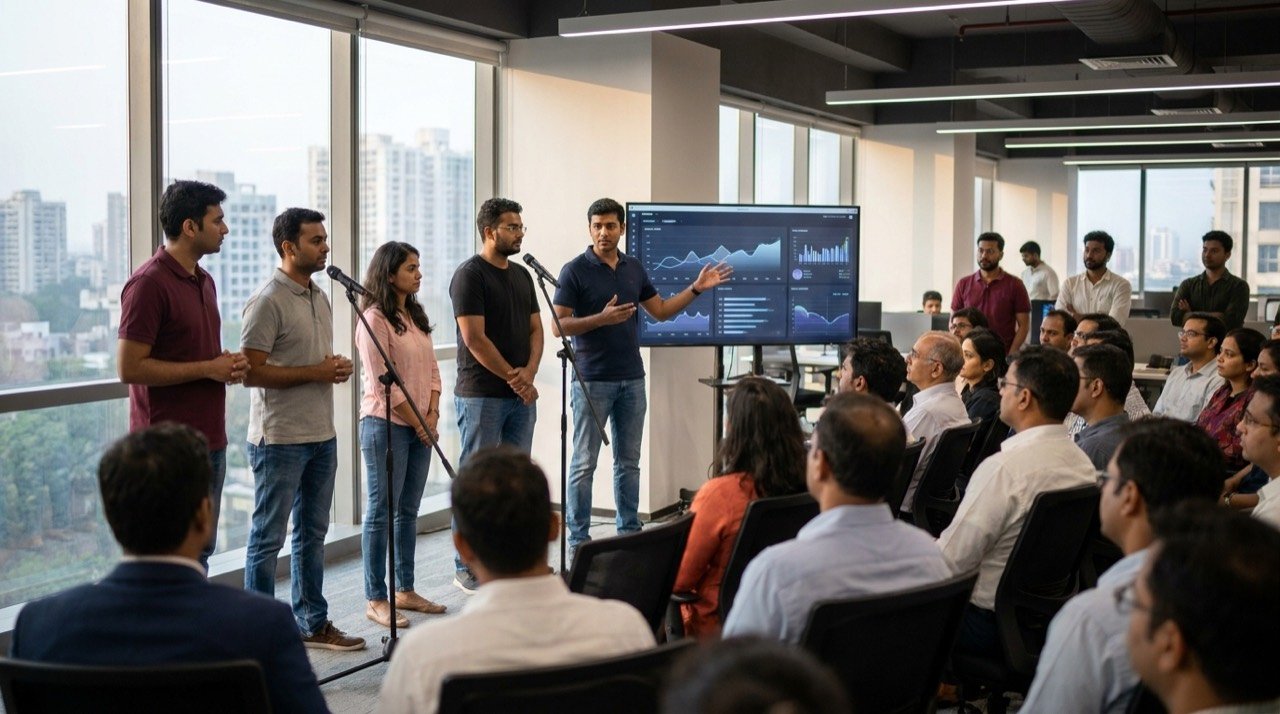
India Tech Funding Climbs to $7.2 Billion in H1 2026 Even as Deal Count Slumps
Indian tech startups raised $7.2 billion in the first half of 2026, up 12 per cent year-on-year, but the number of funding rounds fell sharply as capital concentrated in a handful of mega-deals.
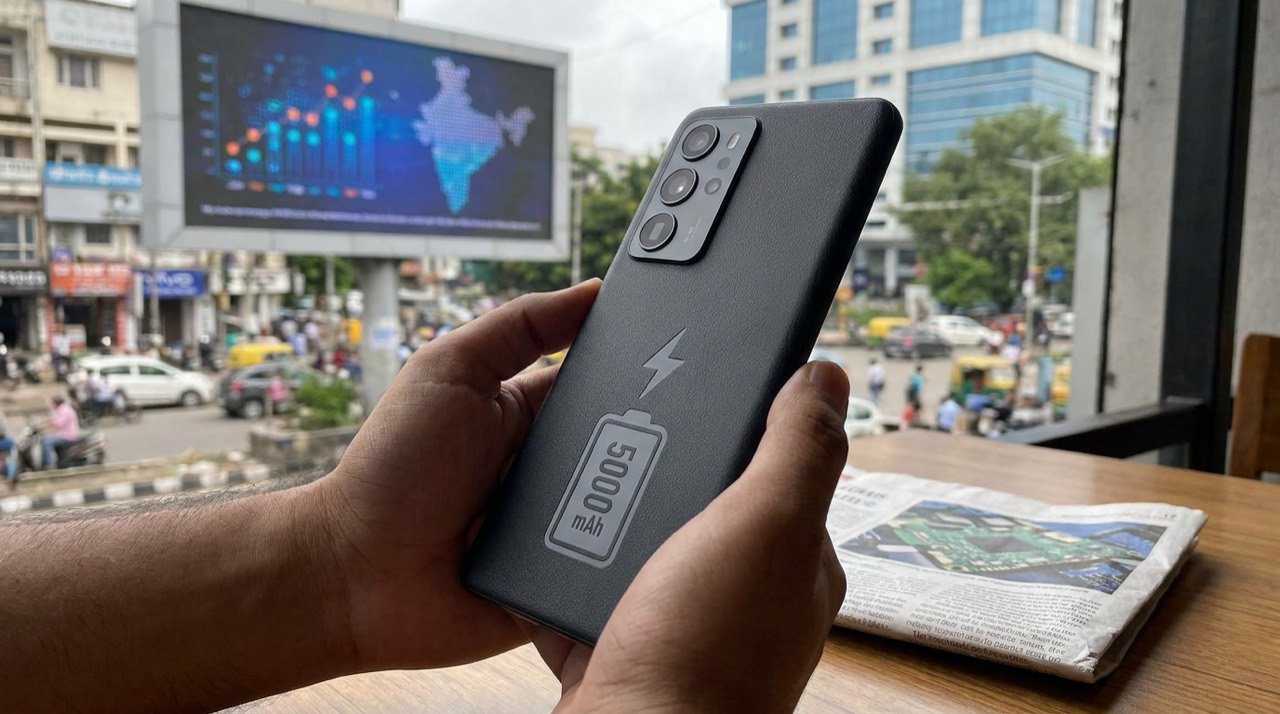
OnePlus N6 Headlines a Crowded End-June Gadget Calendar in India
The OnePlus N6, with its 8,000mAh battery and sub-Rs 25,000 price tag, leads a busy late-June run of smartphone launches in India spanning OnePlus, Oppo and Samsung.