AI Chip Demand May Push Up Smartphone and Laptop Prices in India
Surging demand for memory and storage chips from AI data centres is squeezing global supply, threatening to make smartphones, laptops and gaming devices costlier for Indian consumers.
The NE Times Technology Desk
Commentary & Analysis ·
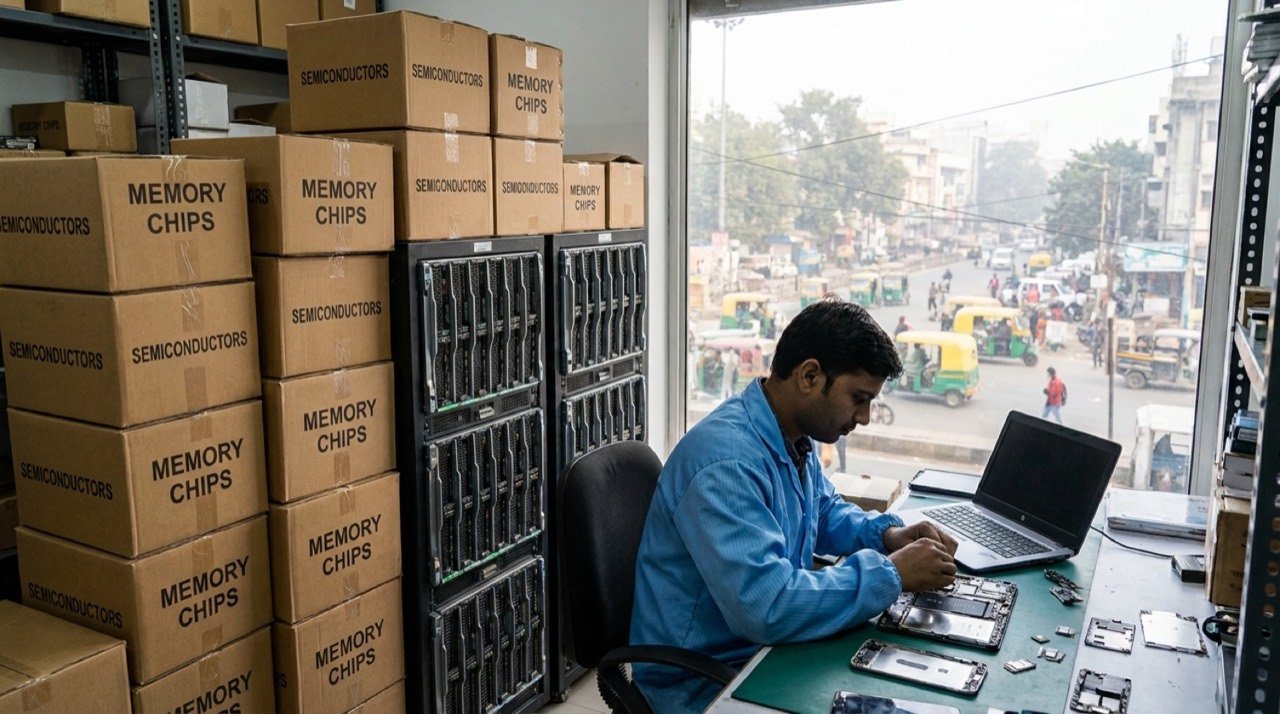
The artificial intelligence boom may soon arrive in Indian wallets in an unexpected way: as higher prices for everyday gadgets. Surging demand for memory and storage chips from AI data centres is pushing up component costs, with consequences that could make smartphones, laptops and gaming devices more expensive for buyers across the country.
How AI is straining chip supply
Reports indicate that AI firms are absorbing large supplies of the very same chips used in everyday consumer electronics. As data centres scale up to power generative AI models, their appetite for memory and storage components is diverting capacity away from the consumer market.
Because memory and storage are foundational to nearly every digital device, this concentrated demand creates a pressure point that ripples across the entire electronics supply chain, from premium servers down to budget phones.
What it means for Indian buyers
For Indian consumers, the timing is delicate. Smartphones and laptops are now essential tools for work, education and daily life, and any sustained rise in component costs tends to filter through to retail price tags within a few quarters.
Price-sensitive segments of the Indian market could feel the squeeze most acutely, as manufacturers weigh whether to absorb higher input costs or pass them on to customers already navigating tight budgets.
The squeeze on device makers
Device makers face a difficult balancing act. With AI companies competing for the same silicon, brands may find their procurement costs climbing even as they try to keep flagship and mid-range products affordable in a fiercely competitive market.
- AI data centres are consuming large volumes of memory and storage chips.
- The same components are essential to phones, laptops and consoles.
- Tighter supply is pushing component prices upward globally.
- Indian consumers could face costlier devices across price tiers.
- Manufacturers must choose between absorbing costs or raising prices.
“AI firms are absorbing large supplies of the same chips used in everyday electronics, creating a pressure point for device makers.”
— Industry summary
The outlook ahead
Whether prices rise sharply or only modestly will depend on how quickly chip makers expand capacity and how long the AI-driven demand surge persists. Some relief could come as new fabrication plants come online, though that capacity takes years to build.
For now, Indian buyers eyeing a new phone or laptop may want to factor in the possibility of firmer prices. The AI revolution, it turns out, may be reshaping not just how we compute but how much our everyday devices cost.
The NE Times View
The AI data-centre boom is quietly taxing ordinary consumers, as memory and storage diverted to server farms pushes up the price of phones and laptops worldwide. For price-sensitive Indian buyers, this imported inflation lands hardest on first-time and budget purchasers. It also strengthens the case for India's semiconductor push, though domestic fabs are years from cushioning such shocks. Expect higher prices well before any home-grown relief arrives.
This article is original commentary and analysis by The NE Times. Background facts were referenced from NDTV and The Indian Express.
You may also like to read

India's Chip Ambitions Take Shape As Tata Fab And Micron Plant Advance
With a notified SEZ for the Tata fab in Dholera, Micron's assembly plant operational and 13 projects cleared under the national mission, India's semiconductor build-out is moving from paper to silicon.
IISc Quantum-Safe Chip Points To India's Defence Against Tomorrow's Hackers
Researchers at IISc have demonstrated a quantum-resilient security chip for IoT devices, presented at the world's premier semiconductor forum, as India accelerates its National Quantum Mission.
Aadhaar App Crosses 31 Million Downloads as Digital ID Use Expands
India's Aadhaar mobile app has passed 31 million downloads, underlining how QR-based digital identity is becoming part of everyday verification across welfare, banking, telecom and travel.
Tata Electronics Cyber Incident Raises Supply-Chain Data Questions
Tata Electronics has confirmed a cybersecurity incident after a ransomware group claimed to post over 200,000 files allegedly tied to Apple and Tesla component designs, spotlighting India's electronics supply-chain security.
More from this section
More
ISRO Fires Semi-Cryogenic Engine Power Head at 175 Tonnes in Landmark Hot Test
ISRO successfully ran its indigenous semi-cryogenic engine power head at 175 tonnes of thrust, clearing a key hurdle toward powering the LVM3 upgrade and the Next Generation Launch Vehicle.

India Tech Funding Climbs to $7.2 Billion in H1 2026 Even as Deal Count Slumps
Indian tech startups raised $7.2 billion in the first half of 2026, up 12 per cent year-on-year, but the number of funding rounds fell sharply as capital concentrated in a handful of mega-deals.
OnePlus N6 Headlines a Crowded End-June Gadget Calendar in India
The OnePlus N6, with its 8,000mAh battery and sub-Rs 25,000 price tag, leads a busy late-June run of smartphone launches in India spanning OnePlus, Oppo and Samsung.