Aamir Khan Rejects 'Love Jihad' Allegations, Says His Marriages Were Civil and Involved No Conversion
Aamir Khan rejects politically charged allegations about his marriage to Gauri Spratt, stressing that his relationships were civil marriages and involved no religious conversion.
Commentary & Analysis ·
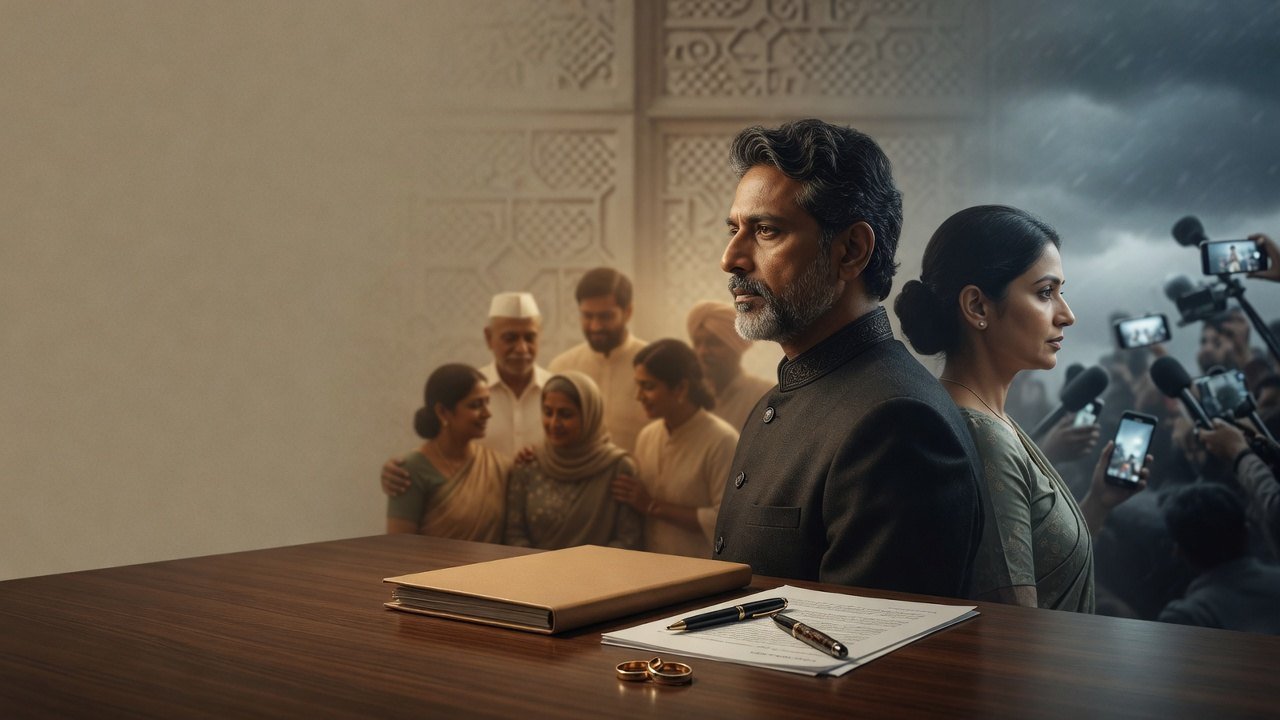
Verified key facts
- Aamir Khan and Gauri Spratt married in Mumbai on 5 July 2026, according to same-day entertainment reports.
- Khan said Gauri Spratt, Kiran Rao and Reena Dutta did not convert religion for marriage.
- The response followed political criticism and a reported religious objection to the interfaith union.
A personal marriage becomes a national controversy
Aamir Khan has responded to a rapidly expanding political and social-media controversy surrounding his marriage to Gauri Spratt, rejecting allegations that have attempted to frame the relationship through the charged phrase “love jihad.” The actor’s central answer was direct: his marriages were civil unions, his partners did not convert to Islam, and religion was not imposed as a condition of the relationships. That clarification has become one of India’s most discussed entertainment stories because it sits at the intersection of celebrity culture, electoral rhetoric, religious identity and the private rights of adults. What began as news of a small Mumbai wedding on 5 July has therefore moved far beyond the usual cycle of photographs, guest lists and fashion commentary. It has become a test of how easily a public figure’s private choices can be turned into an ideological symbol.
What Aamir Khan said
In comments reported on 15 July, Khan described his family as inclusive and pointed to several interfaith relationships among relatives. He said that Reena Dutta, Kiran Rao and Gauri Spratt did not change their faith to marry him. He also stated that Gauri is Christian rather than Hindu, challenging a basic assumption behind some of the accusations circulating online. The actor’s emphasis on civil marriage matters because it reframes the issue from religious conversion to consent and legal partnership. His response did not ask audiences to agree with every personal decision he has made. Instead, it challenged the factual foundation of the allegation: there was, by his account, no conversion and no concealed religious project. In an environment where short clips and partisan captions can travel faster than complete interviews, that distinction is essential.
Why the phrase is so politically loaded
The expression used against Khan is not a neutral description. In Indian political discourse, it is generally deployed by groups alleging that Muslim men use romantic relationships to convert women of other faiths. Critics of the phrase argue that it stereotypes interfaith couples, undermines women’s agency and can expose families to harassment. Supporters of campaigns built around the term say they are raising concerns about coercion or deception. Those competing claims make precision particularly important. Allegations of coercion should be tested with evidence in individual cases; they should not be inferred merely from the religions of two consenting adults. Khan’s response focuses precisely on that point. The public debate may continue, but the available reporting attributes no conversion claim to Spratt and records Khan’s categorical denial of any such requirement.
Celebrity status magnifies every fault line
Aamir Khan is not simply a private citizen in the media economy. For more than three decades, he has been one of Hindi cinema’s most visible actors and producers, associated with commercially successful films as well as projects that have generated political argument. That profile means his marriage was always likely to attract attention. Yet celebrity visibility does not erase the boundary between legitimate public-interest reporting and speculation about belief, family or intimacy. The current episode shows how Bollywood personalities are increasingly treated as proxies in larger cultural battles. A wedding can be recast as a referendum on nationalism, religious demography, gender, secularism or the film industry itself. Once that process begins, the original people involved risk becoming secondary to the narratives built around them.
The civil-marriage point deserves attention
Khan’s reference to civil marriage is more than a defensive detail. India has a legal framework that allows adults from different communities to marry without one partner adopting the other’s religion. In principle, that route protects both personal autonomy and religious continuity. In practice, interfaith couples can still face bureaucratic exposure, social pressure and political scrutiny. The celebrity dimension makes this case unusually visible, but the underlying question affects ordinary couples across the country: can two adults make a lawful personal decision without being forced to perform religious conformity for public approval? The answer has consequences for freedom of conscience as well as the meaning of consent. A mature discussion should distinguish between evidence of coercion, which must be investigated, and prejudice based on identity, which should not be normalised.
How media outlets should handle the story
Responsible coverage needs three guardrails. First, reports should attribute allegations to the people or organisations making them rather than present them as established fact. Second, headlines should not repeat inflammatory labels without immediately including the denial and the absence of verified conversion evidence. Third, unverified family details are not material for a competitive race for clicks. The most relevant facts are already clear from the reported statement: Khan says the marriages were civil, none of the women converted, and his wider family includes members of different faiths. Commentary can explore the political reaction, but it should not manufacture certainty where only accusation exists.
What happens next
The story is likely to remain prominent because it combines a major star, a recent wedding and polarising political language. Further statements may emerge from Khan, Spratt, religious bodies or political leaders. The story will move only when verified information changes; individual social-media posts are not decisive new developments. For readers, the larger significance is less about celebrity gossip than about the rules of public debate. Khan’s rebuttal asks audiences to judge his marriage on disclosed facts rather than on a communal template. Whether one admires the actor or not, the principle at stake is straightforward: adult relationships should not be assigned a hidden motive merely because they cross religious lines. That is why this entertainment headline has become a wider national conversation about privacy, evidence and pluralism.
Sources
- Outlook India - Aamir Khan Rejects Love Jihad Allegations (15 July 2026)
- Times of India - Aamir Khan responds to controversy (15 July 2026)
You may also like to read

Aamir Khan Marries Gauri Spratt in Private Pali Hill Ceremony
Aamir Khan and Gauri Spratt tied the knot at the actor's Pali Hill home in Mumbai on July 5, turning a deliberately small family ceremony into Bollywood's biggest story of the day.
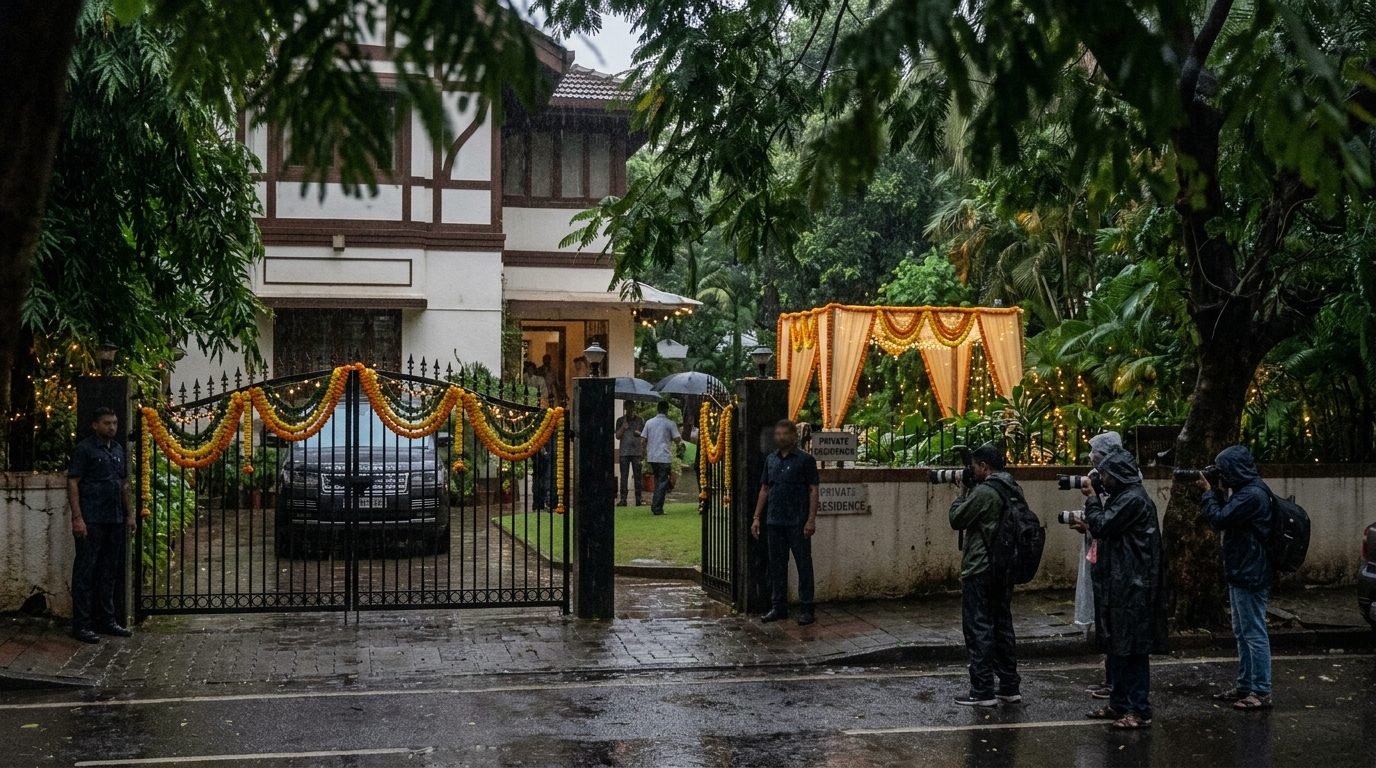
Aamir Khan Confirms July 5 Wedding to Gauri Spratt: 'The News About the Marriage Is True'
The 61-year-old superstar has put months of speculation to rest, confirming an intimate registered marriage to longtime partner Gauri Spratt at his Mumbai home, with no grand celebration planned.

Aamir Khan's quiet July 5 wedding becomes Bollywood's big story
Reports that Aamir Khan has confirmed an intimate July 5 ceremony with Gauri Spratt have captivated Bollywood watchers precisely because the star is choosing privacy over spectacle.

Maatrubhumi: Salman Khan Films Rejects Censor Clearance Rumours
Salman Khan Films has denied reports that censor clearance is pending for Maatrubhumi, turning the film's certification status into the latest talking point in Bollywood's production news cycle.